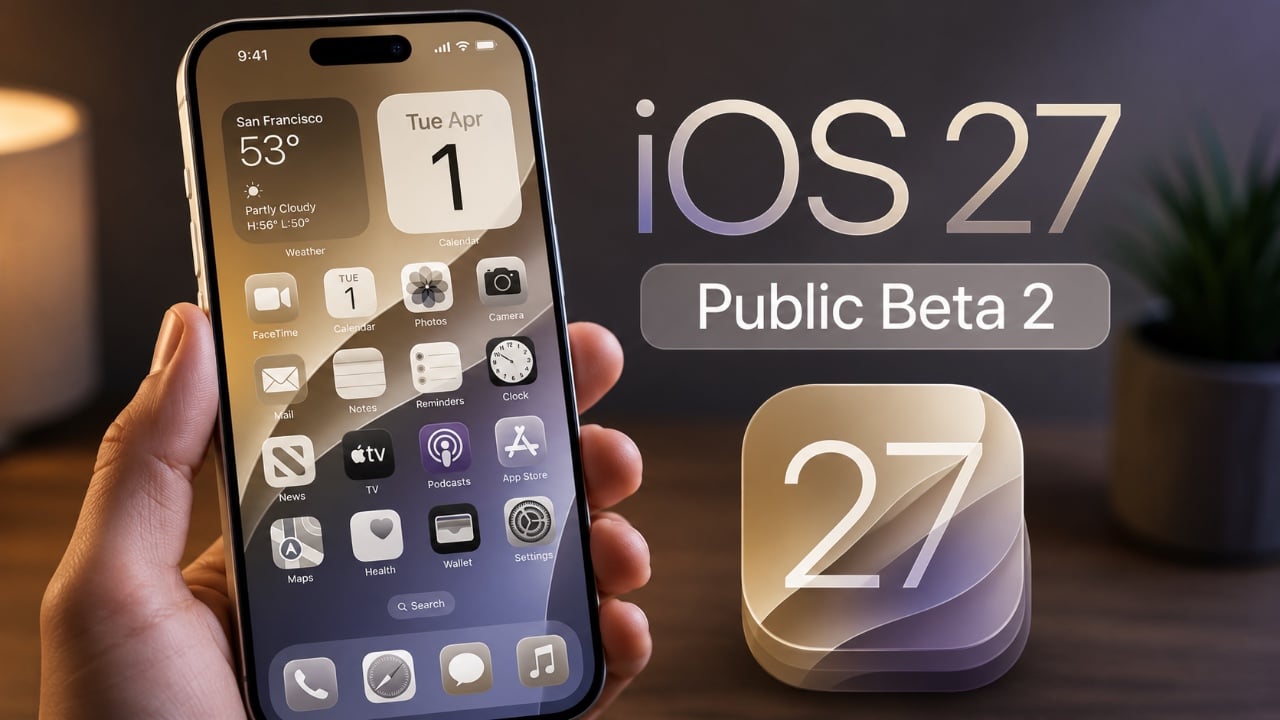
Can Apple have its AI cake and eat it too? That’s the question hovering over iOS 27 as WWDC approaches: a release pitched as a code cleanup and stabilization effort, but one that also expands Apple’s ambitions for system‑level AI.
Apple is reportedly preparing a quieter, steadier update after iOS 26’s messy rollout. Under the hood, two big shifts are shaping expectations: Apple moving toward an “extensions” model that lets users pick third‑party AI engines for on‑device features, and a fresh emphasis on fixing the performance and reliability problems that many users endured last year.
An AI marketplace on your iPhone
One of the biggest changes tipped for iOS 27 is a Settings area called Extensions. Instead of a single, monolithic Siri brain, Apple will route tasks — from text generation to image editing and Siri queries — to AI providers chosen by the user through compatible App Store apps. In practice that makes the iPhone less a closed home for Apple’s model and more a marketplace: multiple models can run behind Apple Intelligence features such as Siri, Writing Tools and Image Playground.
That matters for two reasons. First, it gives users and developers choice: ChatGPT, Gemini, Claude and others could all appear as selectable backends. Second, it becomes a new revenue and policy battleground. Queries handled via the App Store will likely be monetized through subscriptions and in‑app purchases, and Apple’s cut of those payments will influence how providers price their services.
Apple’s approach reads like a platform play: provide the plumbing and the integrations, let specialists build the brains. But there are tensions — quality control, privacy, and who answers for generated content — that Apple will have to manage carefully.
For a closer look at the work Apple is testing around a reimagined assistant and Extensions, see how the company has been trialing a standalone Siri app and multitasking hooks in prerelease code Siri, Redesigned: Apple Tests Multitasking, AI ‘Extensions’ and a Standalone App for iOS 27.
Stability: cleanup or course correction?
The optimism around iOS 27’s stability push has both a technical and human edge. Some reporters and engineers argue that agentic coding — using advanced language models internally to write and refactor code — is making teams faster. If engineers can offload routine changes to models, they can spend more time vetting tricky, system‑level interactions. That’s the theory behind believing iOS 27 could be unusually tidy: AI helps speed the grunt work, humans focus on the hard parts.
Skeptics point to the real pain of iOS 26. The so‑called Liquid Glass visual refresh delivered a sleeker interface but also brought heavier GPU and power demands and a stream of buggy behavior on many devices. Complaints ranged from overheating and shorter battery life to icons and text rendering inconsistencies — problems that software patches have only partly squashed. Apple’s recent updates patched gaps, but the argument from some corners is simple: the company needs to fix what’s broken before piling on more ambition. For context on how iOS 26’s interface changes affected day‑to‑day performance and why people are nervous, read about the earlier iOS interface shifts and fixes in iOS 26's little revolutions: Personal Voice, faster workflows and quiet fixes and the round of patches that landed in 26.4 and later builds iOS 26.4 Lands: Playlist Playground, iCloud Web Search and a Flush of Security Fixes.
Who’s building the brains, and who pays?
Reports suggest Apple is not trying to own the single best model. There are big partner bets — Google’s Gemini is said to be the backbone of the rebuilt Siri in some builds — and Apple reportedly uses Anthropic‑class models inside engineering workflows. But the Extensions plan lets competitors coexist on the same device, a pragmatic move that turns the iPhone into a point of access for many AIs rather than a model battleground.
That strategy creates a new economic axis: every AI subscription a user buys through an App Store channel flows partially through Apple’s commerce system. That’s lucrative, but also puts Apple under regulatory and legal scrutiny, especially after recent courtroom skirmishes over App Store rules and payments. The company will be balancing developer incentives, antitrust concerns and a desire to ensure a consistent user experience.
A cautious, consequential WWDC
If Apple truly prioritizes polish this cycle — trimming cruft, stabilizing high‑impact visuals, and hardening performance regressions — iOS 27 could feel like a relief to many iPhone owners. If it delivers both a cleaner OS and a workable Extensions marketplace, the platform would shift from being a single‑vendor model to an AI utility hub on billions of devices.
But success isn’t automatic. Opening the floodgates to third‑party AI increases complexity: more points of failure, more content to moderate, and tougher privacy choices for users. Apple will need to show that its integrations don’t simply make the system more flexible, but also more dependable.
WWDC will tell us which direction wins: a careful re‑engineering of the system’s foundations, or another ambitious layer that users only appreciate if Apple nails the basics this time around.