The World Cup is bringing more than soccer fever to North Texas and Massachusetts. It’s also turning parking spaces — from suburban driveways to city-owned lots — into a fast-moving commodity.
In Arlington, homeowners near AT&T Stadium are finding a new way to cash in. A parking app called DIBS Parking Spot is recruiting residents to rent out driveways within walking distance of the venue as FIFA match days approach. Some spots listed on the app recently showed prices around $60, while others in the area were going for $100 or more, depending on the day and proximity to the stadium. On the city side, Arlington has its own Entrepreneurial Parking Program: businesses and churches near the entertainment district can also charge for event parking, though the price has to stay fixed once it’s advertised on match day. The city is adding more supply, too, with paid parking at two municipal lots — Division Street and Meadowbrook Park — for every World Cup game hosted there. Rates range from $25 to $125, and the lots will open four hours before kickoff.
That local scramble reflects a bigger reality: demand around big events can change a simple parking spot into a small business. In Arlington, that’s especially true because AT&T Stadium — temporarily called Dallas Stadium for the tournament — will host nine matches, more than any other North American venue.
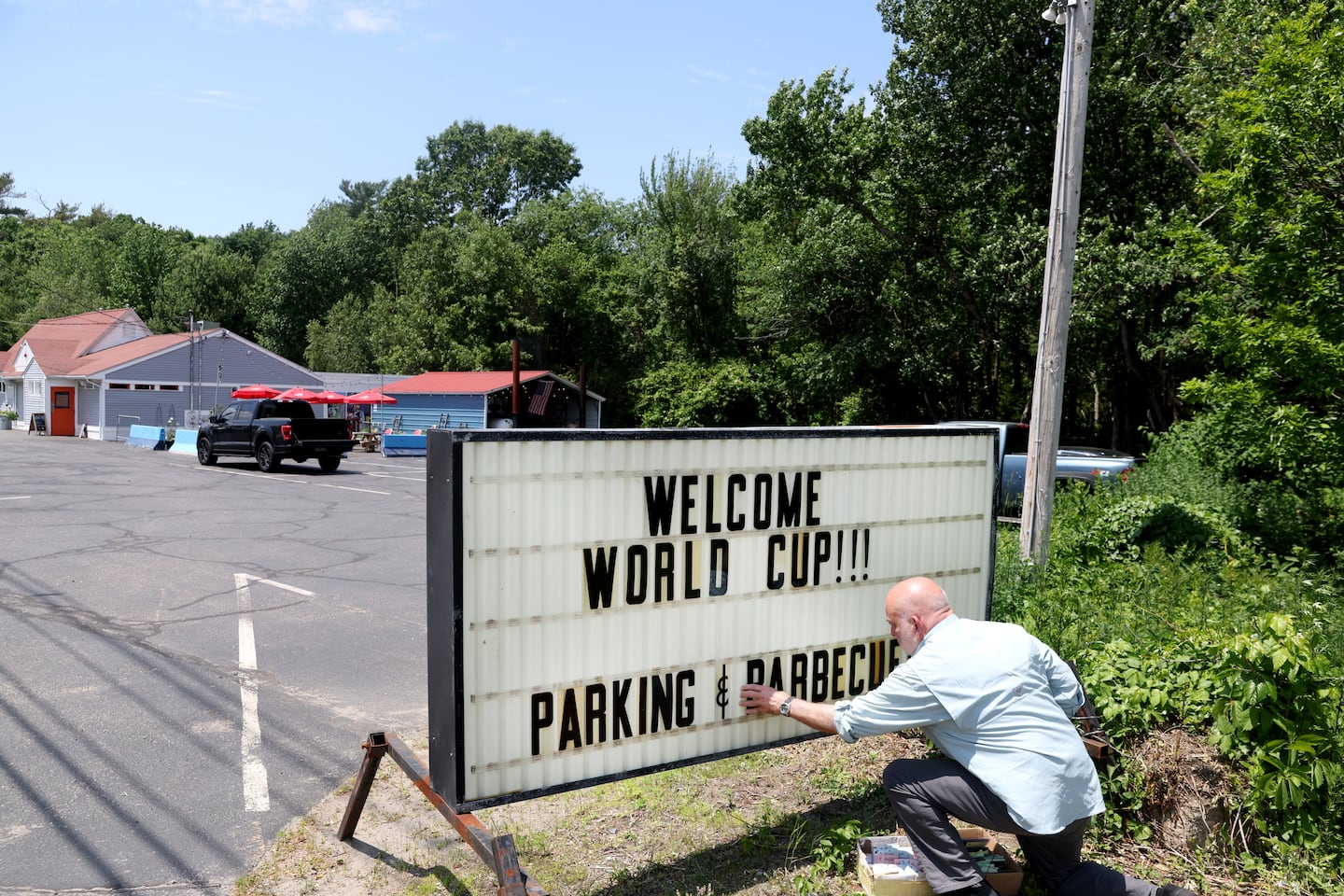
Across the country in Foxborough, the mood is less entrepreneurial and more cautiously braced. Businesses around Gillette Stadium, renamed Boston Stadium for the tournament, are staffing up, testing special menus and trying to guess just how many of the expected 60,000 fans will actually fan out into town. At Blondie’s Barbecue in Walpole, co-owner Peter Crowley described the approach as flexible and patient: the restaurant is ready, but nobody is pretending the crowd pattern is easy to predict. Nearby places are leaning into local flavor, with one restaurant planning seafood specials aimed at giving visitors a New England experience.
The parking headache is real there, too. Fans planning to drive to matches at Boston Stadium have to buy parking passes in advance, with prices set at $175 and scheduled to climb in the final 24 hours before kickoff. Drop-offs and pick-ups by private cars aren’t allowed near the stadium, which leaves many out-of-town fans with a limited set of options. For some in western Massachusetts, that means a long drive to Boston, a train or bus to Foxborough, and then the whole routine in reverse after the match. It’s not exactly a casual outing.
That mix of hassle and opportunity has become part of the World Cup’s local economy. For homeowners, it can mean a quick side hustle. For restaurants and hotels, it means extra staff and menus built around an unpredictable rush. For fans, it means planning early or paying dearly later. And for anyone who remembers past stadium events, there’s a familiar truth hiding underneath all of it: the best parking spot is usually the one you locked down long before the first whistle.
In Arlington, that could mean a driveway. In Foxborough, it might be a barbecue joint with room to spare. Either way, the tournament has already started changing how both towns think about space, traffic and a very ordinary asset that suddenly isn’t ordinary at all.