If your next phone shopping trip feels a little less friendly to budget buyers, the reason may have less to do with camera gimmicks or AI buzzwords than with something far less glamorous: RAM.
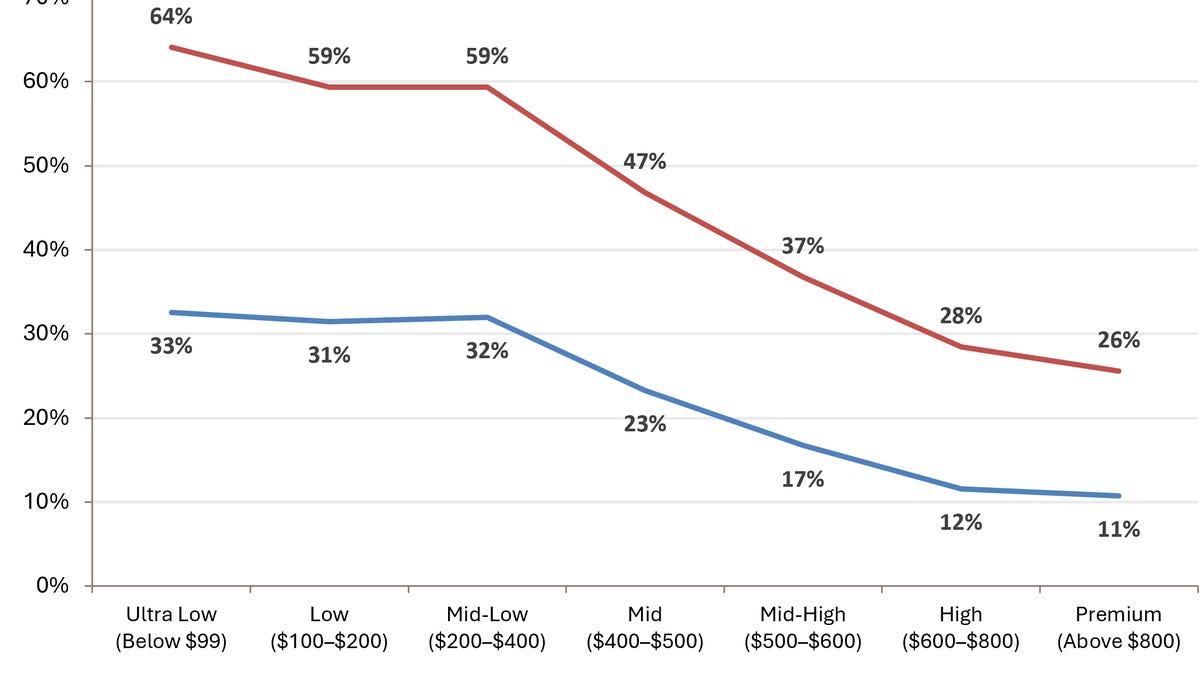
A new Omdia report says memory prices have climbed so sharply that phones under $400 are now getting squeezed from both sides. On the cheapest models, memory can make up as much as 64% of the total bill of materials. In the $100 to $400 range, it still reaches as high as 59%. That kind of pressure is forcing manufacturers to rethink whether ultra-cheap phones are worth making at all.
Omdia expects shipments of smartphones priced below $400 to fall 22% year over year. At the same time, phones above that threshold are projected to grow 5.7% this year, which tells you where the industry’s attention is drifting.
The shift isn’t happening in a vacuum. AI infrastructure is swallowing huge amounts of memory, and that’s tightening supply across the broader tech chain. The result is familiar to anyone who has watched component shortages ripple through the gadget world before: when one part gets expensive enough, the products built around it either get pricier or start disappearing.
For phone makers, the cheapest models are the first to suffer. They have the least room to absorb cost increases, and their buyers are the most sensitive to price hikes. Omdia says low-end products are already becoming unprofitable, with vendors gradually retreating from the segment. That lines up with what buyers are starting to see on shelves: fewer true bargain devices, and more phones that feel like last year’s hardware wearing a new badge.
It also helps explain why companies are leaning on compromises elsewhere. Omdia says brands may downgrade display panels, trim camera setups by using fewer sensors or smaller ones, and stick with older chipsets instead of the latest silicon. That kind of trade-off is already showing up in the market. Motorola has leaned on familiar chips across much of its Moto G and Razr lineup this year, and Motorola’s Moto G price hikes are a pretty blunt sign of how the memory crunch is spilling into real pricing decisions.
The same pressure is reaching phones a little higher up the ladder, too. Nothing’s new Phone (4b) landed at a price that barely undercuts the more capable Phone (4a), a sign that even “budget” launches are getting awkward fast. Samsung’s Galaxy A57 and A37 also arrived with slightly higher prices and a bit more polish, which now feels less like a trend and more like a survival tactic.
For consumers, the near-term outlook is pretty straightforward: fewer cheap phones, fewer real bargains, and a lot more nudging toward midrange and premium devices. That doesn’t mean the $1,000-plus flagship crowd is immune, but the pain shows up differently there. Higher-end phones can spread memory costs across a bigger total price, so the hit is less dramatic. That’s why premium models keep moving while the bottom of the market starts to thin out.
There’s still some hope that this won’t last forever. Analysts have said the RAM crunch should ease sometime around late 2027 or early 2028 as AI build-outs slow and memory production catches up. Until then, though, the budget end of the Android market looks like it’s entering a long, uncomfortable stretch where “upgrade” increasingly means “how little can we remove and still call it new?”
A market that’s learning to get smaller
That may sound harsh, but it’s already changing the way phones are sold. Instead of big year-over-year leaps, we’re seeing more recycled parts, more cautious spec sheets, and a lot more hesitation from brands that used to rely on low-cost volume. Buyers looking for value may be better off hunting down discounted older models than waiting for a brand-new budget launch to wow anyone. The new stuff, increasingly, is built to survive the memory bill first and impress you second.