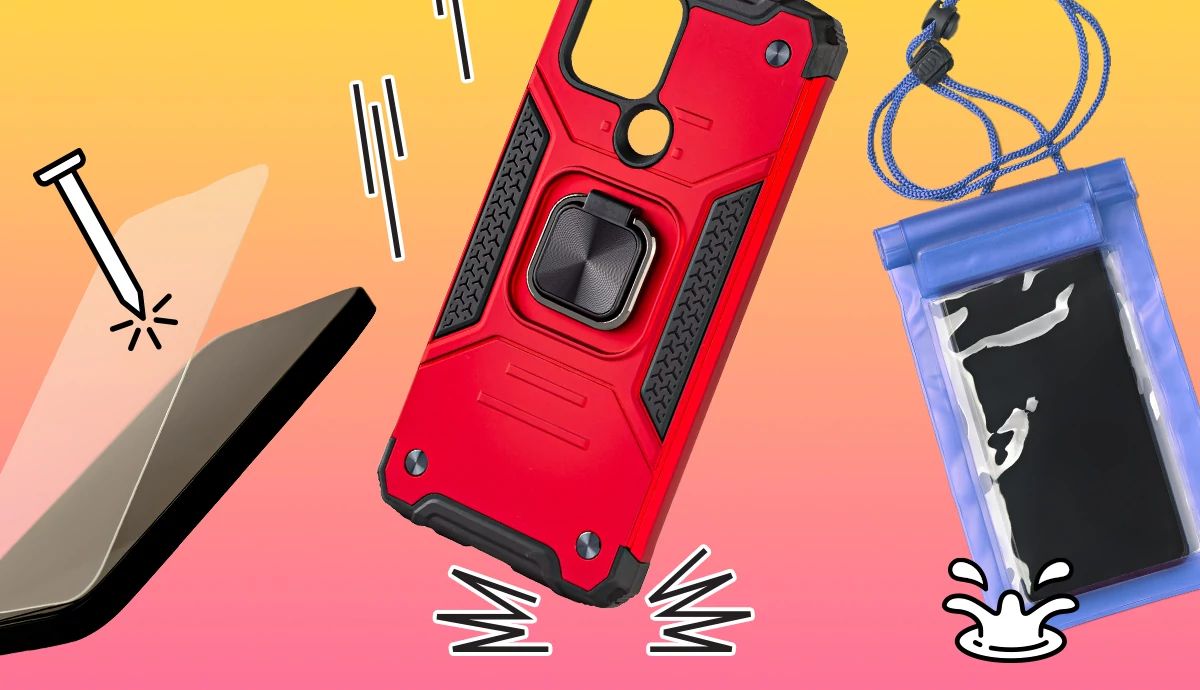
A phone case can look tough and still fail the moment it matters.
That’s the annoying truth behind a lot of “military-grade” marketing. The label sounds reassuring — especially when you’ve just dropped serious money on a smartphone that can easily cost $1,000 or more — but the real-world protection depends on far more than a buzzword stamped on the box. Materials, shape, grip, and even tiny details like raised edges and corner bumpers all affect whether your phone walks away with a scuff or a spiderwebbed screen.
The first thing to know is that not all hard cases are created equal. AARP’s tech guidance points to polycarbonate as one of the better materials because it’s shatter-resistant, and it gets even better when manufacturers layer on impact-resistant rubber. That combo helps absorb the shock when a phone hits the floor instead of sending all that force straight into the glass. If a case is labeled “rugged” or “military-tested,” that’s usually a good sign — though, as Yahoo Tech has explained, the phrase “military-grade” can be more marketing than proof.
That distinction matters. Those claims often trace back to the MIL-STD-810G standard, but the testing process isn’t as uniform as it sounds. Manufacturers can run the tests themselves, sometimes with multiple sample units, and the results don’t necessarily show how a case holds up after repeated drops. In other words, a case can survive a demo and still disappoint after the third or fourth real accident. If you’re comparing options, it’s worth looking for how the company says it tests the product, not just whether it borrowed a military-sounding phrase for the packaging.
A sturdier shell helps, but the small design touches are where many cases actually earn their keep. Raised lips around the screen and camera keep those glass surfaces from taking the hit first. Corner bumpers help too, since corners are usually the first point of impact when a phone slips out of a hand or off a table. Interior cushioning — often a silicone pad — gives the phone another layer of defense against direct contact inside the case.
And then there’s grip, which is the protection feature people underestimate most. Slick cases may look sleek on a shelf, but they can be maddening in daily use. Textured sides, ridges, and collapsible grips like PopSockets or similar add-ons make a surprising difference. If your phone is less likely to tumble in the first place, you’re already ahead.
A lot of shoppers stop at the case, but that only solves part of the problem. Tempered-glass screen protectors still make sense, especially if you’d rather replace a $10 accessory than pay for a display repair. Some budget options, like the iPhone accessories under $20 that actually earn their keep, show how much protection you can add without spending a fortune. Camera lens protectors and port dust plugs can help too, especially if you carry your phone to the beach, on construction sites, or anywhere grit and sand seem to materialize out of nowhere.
There’s also a practical trade-off worth acknowledging: the most protective cases are often bulkier. Fully sealed waterproof models can be excellent for travel or boating, but they can make the phone feel chunky and slightly less responsive to touch. For most people, a simpler rugged case plus a good screen protector and a better grip hits the sweet spot. If you want a deeper dive into how manufacturers stretch those “military” claims, this explainer on military-grade phone cases breaks down where the label comes from and why it deserves a skeptical eye.
Phones are expensive enough already. The case should do more than look nice in a product photo. It should buy you time, cushion the blow, and keep a small mistake from turning into a repair bill that stings for weeks.