Apple’s first foldable iPhone is looking less like a science project and more like an actual product.
Multiple reports this week point to the same conclusion: the device — widely referred to as the iPhone Ultra — has moved into mass production, and the launch window is still hovering around September. Chinese outlet Cailian Press said it spoke with people inside Apple’s supply chain who described the design as locked in and the build process already underway. Other reports from East Money and Korea’s The Bell echoed the same basic message, with Foxconn reportedly ramping up hiring to handle assembly at scale.
That matters because the foldable has been surrounded by the kind of launch chatter Apple usually hates: whispers of hinge trouble, low yields, and a possible slip into late fall or even next year. For now, at least, those fears seem overstated. Sources cited by Cailian Press said they hadn’t heard of any delay and still expected a September delivery window.
The picture isn’t perfectly settled, though. Analyst Ming-Chi Kuo has suggested Apple may unveil the foldable alongside the iPhone 18 Pro models in September but hold sales until the fourth quarter. Bloomberg’s Mark Gurman has also bounced between two different timelines in recent months, first saying the foldable wouldn’t ship alongside the Pro models and then later reporting that Apple was still aiming for a September debut, or something close to it.
That uncertainty is classic Apple launch theater: the stage date can arrive before the actual product lands in stores, especially when a new category is involved. The company seems to be preparing for demand either way. Recent reporting says Apple has told suppliers to ready roughly 10 million foldable units this year, up from earlier forecasts in the 7 million to 8 million range. That’s a serious commitment for a first-generation device, especially one expected to cost somewhere around $2,000 to $2,500.
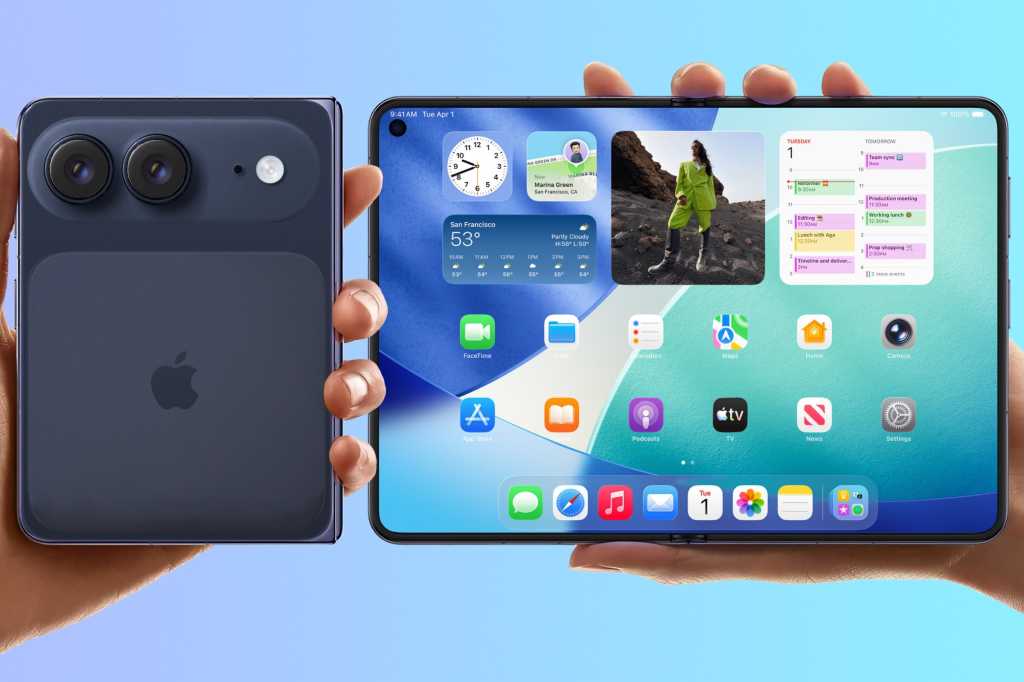
Design-wise, the foldable is shaping up to be more iPad than gimmick. When closed, it should look like a conventional iPhone. Open it up, and you’re reportedly looking at a 7.8-inch inner display with a 4:3 aspect ratio, plus a smaller 5.5-inch cover screen. That places it in the neighborhood of an iPad mini, which is exactly why the device keeps getting described as a pocketable tablet as much as a phone. Mashable’s screen comparison makes that point nicely, and it helps explain why Apple may be positioning the device as a new class of product rather than just another foldable phone.
The rumored hardware list is very Apple-in-2026: an A20 chip, a Touch ID power button, and Apple’s C2 modem in some markets. The pricing, meanwhile, is pure premium Apple. If the leaked estimates hold, this will be one of the most expensive iPhones ever sold, and that’s before anyone starts adding cases, insurance, or the emotional damage of dropping a two-thousand-dollar folding screen.
Still, Apple appears to believe the market is ready. That conviction fits with the broader roadmap taking shape across the iPhone line, where the company is reportedly planning a busier-than-usual stretch through 2027. CNBC recently reported that Apple is working toward at least five new iPhone models across the next year and a half, while also raising foldable production plans and juggling component shortages tied to AI-driven memory demand. In other words, the foldable isn’t being treated like a novelty side quest. It’s part of a much larger push.
The supply-chain question may end up being the most interesting part of this story. Apple has already had to work through hinge issues during testing, according to earlier reports, and there’s still the possibility that initial inventory will be tight if yields don’t cooperate. That would fit a familiar pattern for a brand-new Apple product category. The first versions usually arrive with more hype than stock.
Even the labor story tells you how real this thing has become. Reportedly, Foxconn has been recruiting temporary workers to keep assembly moving, a reminder that a foldable iPhone doesn’t just arrive in a keynote slide deck. It takes a small army to get from prototype to shipment, especially when the tolerances are tighter than on a regular slab phone.
And while Apple hasn’t said a word publicly, the rumor mill is doing what it always does this time of year: turning a product that exists mostly in supply-chain whispers into the center of the smartphone conversation. The foldable iPhone has now been linked to September hopes and shipping uncertainty, a wide, iPad-like design, and even the broader iPhone 18 Pro roadmap. Add in the possibility of a late-year sales start, and Apple may end up pulling off a familiar trick: making everyone argue about the timing long before anyone can argue about the price in person.
If the reports are right, the big question won’t be whether Apple can make a foldable iPhone. It’s whether it can make enough of them, fast enough, for the people ready to pay for the first one.