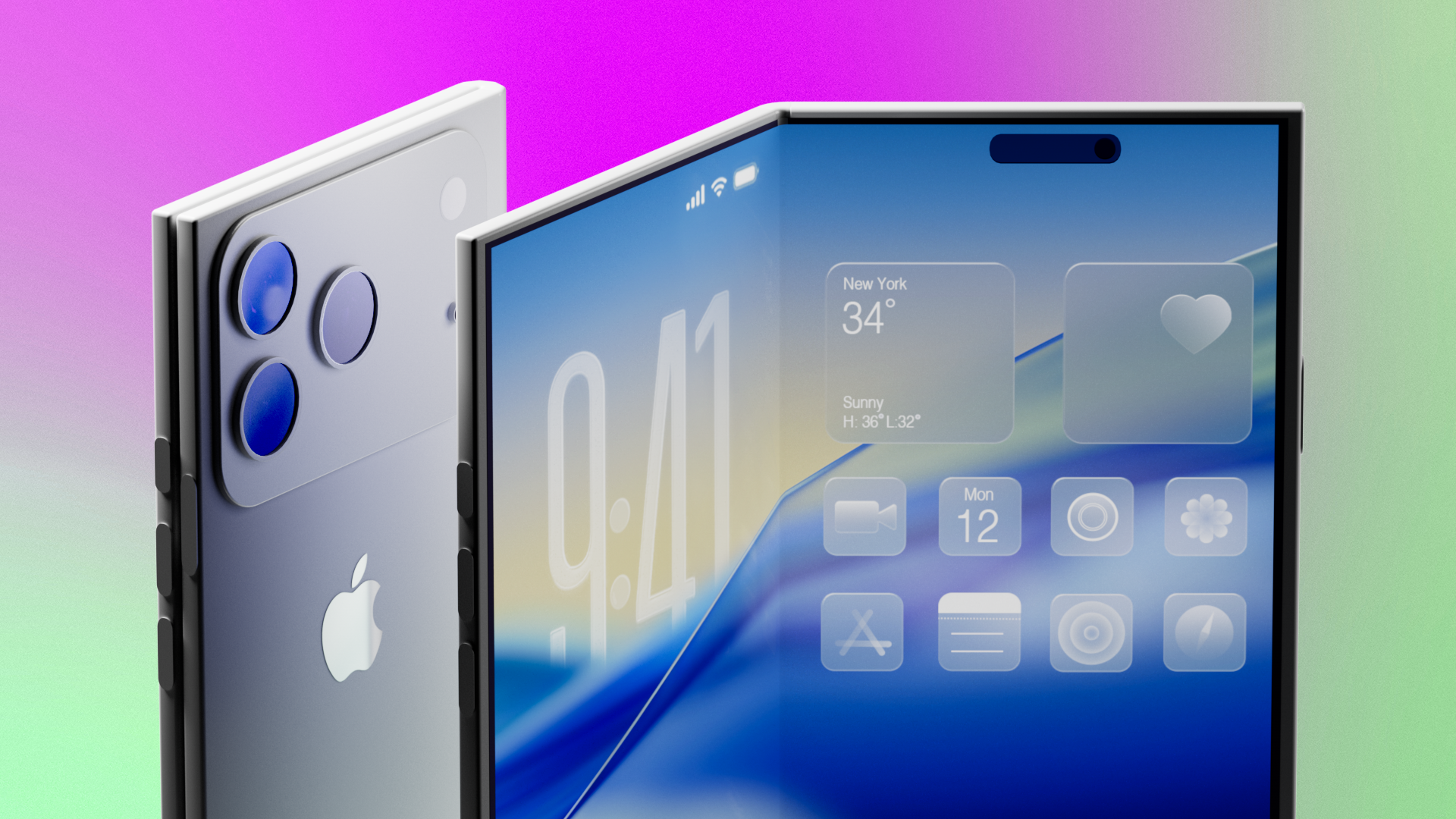
Apple’s first foldable iPhone is already shaping up to be a strange little product: part phone, part tablet, part nostalgia trip. And for a moment, it seems Apple may have considered giving it a matching stylus — a shorter Apple Pencil made specifically for the device.
That’s the latest wrinkle in the long-running foldable-iPhone rumor mill. According to Bloomberg’s Mark Gurman, Apple internally prototyped and tested a Pencil-style accessory for the foldable, then backed away from actually shipping it. The idea is easy enough to understand. A wide foldable screen could, in theory, benefit from a stylus the same way an iPad does. Handwriting, sketching, precise edits — all the things Apple loves to market when the Pencil is involved.
But foldables are not iPads, and that’s where the plan starts to wobble.
The biggest problem is physical, not philosophical. A stylus clipped to the side of a folding phone would have to be small, light and easy to lose. It also has to stay out of the way when you just want to use the device like a phone. Then there’s the screen itself. A foldable display is more vulnerable than the glass panels on Apple’s regular phones, so repeated stylus use raises obvious concerns about scuffs and long-term wear.
That makes the reported hesitation less surprising. Apple has spent years treating the foldable as a durability problem as much as a design challenge, which is one reason the company has moved so slowly while Samsung, Google and Motorola have already spent years iterating in public. If Apple does launch its foldable in the form now being discussed, it may prefer to keep the first version as simple as possible and avoid adding accessories that complicate the experience.
Still, the stylus idea has an obvious appeal. A foldable iPhone would essentially be a pocketable mini-tablet when opened, and Apple’s iPhone Fold could ship in December rather than immediately after the company’s usual fall reveal. That kind of hybrid device invites more ambitious input methods. It also puts Apple in the same conversation as Samsung’s stylus-friendly phones, which have long sold the idea that a big-screen handset can do more than just stream video and scroll feeds.
There’s even a bit of old-school symmetry to the story. Steve Jobs famously mocked the need for a stylus when he introduced the original iPhone in 2007, arguing that fingers were the natural interface. That line has become Apple folklore, and the company still leans on it whenever it wants to cast touch-first design as a virtue. But Apple has never been shy about moving past Jobs-era taboos when the hardware makes the case. The company’s foldable iPhone rumors are already proof of that.
The more practical argument against the Pencil may be the most convincing one. Even if Apple built a tiny accessory that magnetically attached to the side of the phone — which is reportedly part of what it explored — it would still need a place to live, a reason to exist and a user base willing to carry yet another piece of hardware around. That’s a lot to ask for a device that is supposed to feel elegant.
And yet, it’s hard not to smile at the thought of Apple briefly drifting back toward Palm Pilot territory. If you remember the era of PDAs and little plastic styluses, you know the vibe: nerdy, useful, slightly ridiculous. Exactly the sort of thing that can become cool again once Apple packages it correctly.
For now, though, the Pencil for the foldable looks like a prototype that never fully escaped the lab. Apple may revisit the idea later — especially if foldable displays become tougher and less scratch-prone — but the first version of its foldable phone seems more likely to arrive as a pure device than a bundled ecosystem moment.
That fits a broader pattern in Apple’s recent hardware thinking. The company has been cautious about expanding its first foldables beyond the essentials, just as it has kept other experimental ideas — from bigger format changes to wide foldable ambitions — in reserve until the timing feels right. And in this case, Apple may have decided that one new form factor at a time is enough.