A week’s worth of leaks can say a lot, but when they start lining up this neatly, the picture gets hard to ignore.
Apple’s long-rumored foldable iPhone is now surfacing in two very different forms: a fan-made reveal video that tries to imagine the stage presentation, and a set of alleged motherboard photos making the rounds on X and Chinese social media. Put together, they sketch a device that sounds less like a fantasy and more like something nearing the finish line.
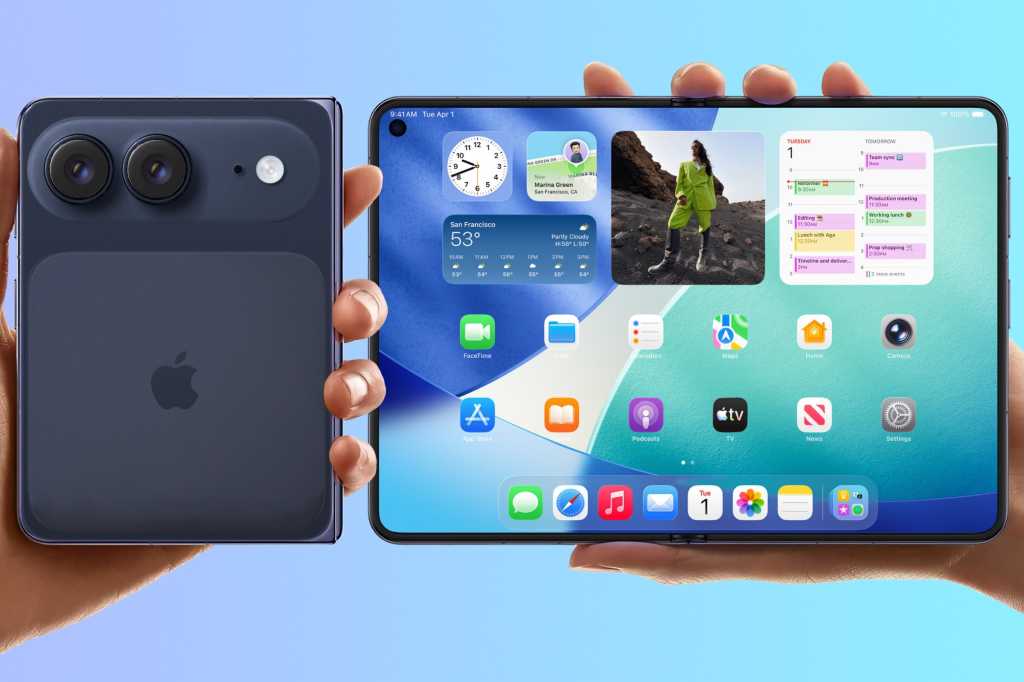
The concept video, created by designer Gunhoo Lee, imagines Apple unveiling a foldable model with a 7.8-inch inner display, Touch ID, a mechanical hinge, dual batteries and an A20 chip. The mock presentation is polished enough to feel like Apple’s own marketing team might have storyboarded it, and it lines up closely with the rumor trail that’s been building for months. Meanwhile, the leaked component images appear to show a hinge connector, flex cable connector and other motherboard parts tied to the same phone.
None of that proves Apple is about to show the thing off, of course. But it does reflect where the conversation has landed: this is no longer just a speculative sketch in the corner of the internet. It’s a product people are beginning to map out in detail, from the fold mechanism to the battery layout to the price.
The timing is doing a lot of work here. Apple is widely expected to introduce its first foldable alongside the iPhone 18 Pro rumor set, with the usual September event now expected to carry the weight of a much busier-than-normal launch. And if the latest reports are right, the foldable will arrive with a 5.5-inch cover screen, a 7.8-inch inner display, an A20 Pro chip, a 5,000mAh battery, dual 48-megapixel rear cameras and 18-megapixel selfie cameras on both displays. The price, naturally, is the part that makes your eyes widen: at least $2,000.
That price tag helps explain why Apple may frame the device more as a premium statement piece than a mainstream volume seller. It also keeps the foldable in the same orbit as Samsung’s highest-end devices — and far away from the kind of phone most buyers casually toss into a shopping cart. Some recent reporting has even suggested Apple’s foldable could be announced in September but ship later in the year, which would fit Apple’s habit of making the reveal feel inevitable while still controlling the rollout.
There’s also a little irony in the way Apple’s foldable is arriving. While the company’s pro models seem set to stay fairly familiar — with talk of a smaller Dynamic Island, a bigger battery and a possible variable aperture camera upgrade — the foldable is the wild card that could steal the spotlight. Tom’s Guide’s latest comparison of the iPhone 18 Pro Max and iPhone 18 Pro makes the point well: even Apple’s regular flagship fight may be overshadowed by the new form factor sitting above them.
The design chatter matters because it’s giving us a sense of Apple’s priorities. Early rumors suggest the company wants a wide inner display rather than something tall and narrow, which would make the foldable feel closer to a mini tablet when opened. That approach could set it apart from rivals in a market where some folding phones still feel like they’re asking users to compromise instead of upgrade.
And then there’s the less glamorous evidence: the motherboard leaks. These are the sort of images that usually mean two things. Either they’re fake, or somebody close enough to the supply chain is already handling parts that weren’t supposed to be public yet. The photos and diagrams circulating now appear to show the same arrangement of components, which at minimum suggests that multiple people are seeing a similar build. That doesn’t make them official, but it does make them interesting.
For Apple watchers, the bigger story may be that all these fragments are starting to converge. A concept video here, board-level images there, and a steady stream of parts descriptions in between. It’s the kind of drip-feed that often precedes a product launch, even if Apple itself stays perfectly silent until the stage lights come on.
The foldable market still isn’t an easy sell. CNET’s survey claim that most U.S. adults couldn’t care less about foldables, whether or not you take the exact number as gospel, reflects a broader truth: plenty of people still see folding phones as expensive answers to questions they never asked. Apple seems to know that. Which may be why it’s taking its time, aiming for a device that looks less like a gimmick and more like the polished version of a category that’s finally grown up.
If these leaks are even half right, the company is betting that a clean design, a big inner screen and Apple-grade hardware can do what years of rivals have not: make people want a foldable instead of just being curious about one.