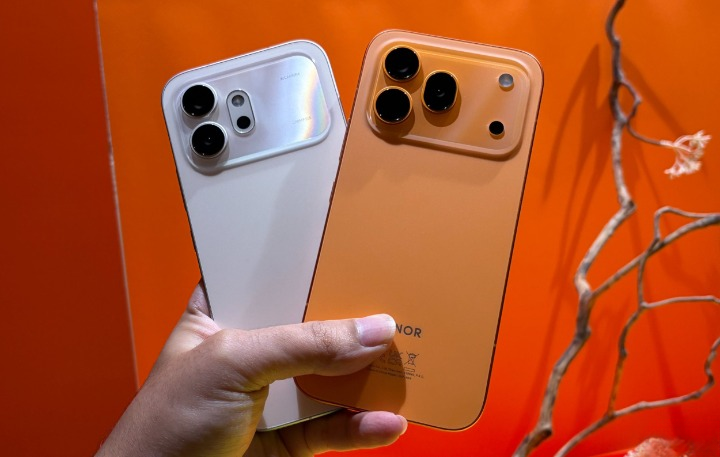
Honor has quietly widened the middle of its lineup with two devices that look much the same at first glance—then diverge where it counts. The Honor 600 and Honor 600 Pro share design, displays and a camera-first spirit, but their internals and a few extra perks make them two distinct propositions for very different buyers.
Same skin, different guts
Both phones use a 6.57-inch AMOLED panel with a 120 Hz refresh rate and a pixel-rich 1264×2728 resolution. Peak brightness measurements are essentially neck-and-neck in testing: Honor's numbers came in the high thousands of nits, and both models feel flagship-grade in daylight. They also share a premium aluminum frame, IP68/IP69K dust-and-water resistance and near-identical dimensions—though the vanilla 600 is about 10 grams lighter on the scale.
Where they split is under the hood. The standard Honor 600 leans on a Snapdragon 7-series chip (Snapdragon 7 Gen 4 in most regions) with entry memory starting around 8GB/128GB (regional SKUs vary). The 600 Pro moves to last year’s Snapdragon 8 Elite and base configurations start at 12GB/256GB, with up to 16GB/1TB on higher trims. Benchmarks reflect that gulf: the Pro doubles or better the scores in common synthetic tests, making it the obvious choice for gamers or anyone who intends to keep a phone for many years.
Cameras: same giant sensor, different reach
Both models center on a 200MP main sensor—one of the largest you’ll find in this tier—paired with a 12MP ultrawide that doubles as a macro lens. That main camera delivers detailed daylight shots and solid low-light performance across the board, but the Pro adds a 50MP telephoto (roughly 3.5x) that changes how you can compose at a distance. If you regularly shoot beyond 2x, the Pro’s dedicated zoom is the most tangible hardware advantage.
Video capability also favors the Pro: while the Honor 600 tops out at 4K30 (and no HDR video), the 600 Pro supports 4K60 and an HDR Vivid mode for punchier clips. Selfie hardware is strong on both (50MP sensor), though the Pro shows an edge in dim conditions.
If you follow the industry’s renewed focus on imaging, these phones sit squarely in that conversation—similar to other camera-first efforts we’ve seen from competitors like the Vivo X300 Ultra’s camera-first push and recent premium camera experiments such as the Oppo Find X9 Ultra.
Batteries, charging and a small regional mess
Honor has equipped the series with very large cells, fast wired charging and (on the Pro) fast wireless charging. Across markets the numbers vary: Honor’s global and Chinese SKUs commonly list a 7,000 mAh cell with 80W wired charging; some European review samples and tests reported a slightly reduced 6,400 mAh pack for those specific units. In practical terms, both phones deliver long runtimes—testing showed the Pro sometimes lasting longer under heavy gaming loads despite its higher-powered chipset, while the vanilla 600 could be the better choice if your usage is mainly web browsing and video streaming.
Charging pace is very similar thanks to the shared 80W wired tech: quick top-ups in under an hour. The Pro’s added 50W wireless option is a convenience bonus for dock users.
AI features and extras
Honor has baked AI into the experience with a physical AI button that launches on-device tools—think object removal and the privacy-minded Image-to-Video 2.0 engine, which turns stills into short clips locally on the device. Honor is experimenting with a tokenized model for extended use: you get a starter quota of free generations, and can purchase more if you use the feature heavily.
Both phones include stereo speakers with similar tuning and loudness, and both promise the same multi-year OS upgrade commitment from Honor.
Pricing and availability
Honor has started rolling the 600 series into local markets. In South Africa the company priced the Honor 600 at about R14,999 and the Pro at R19,999 (contract and retail options are available). In the Philippines, local pricing for the line has also been announced—Honor positioned the 600 to be very competitive against midrange rivals.
There are also murmurs and certification filings of additional 600-series variants (a “Smart Edition” appeared under model MRK‑NX1 in certification databases), with speculative specs—larger batteries and extreme zoom claims—but those details remain unconfirmed and should be treated as rumors for now.
Who each phone suits
- Buy the Honor 600 if you want flagship-level display and main-camera quality at a much lower price, long video/web browsing runtime, and you rarely zoom past 2x.
- Buy the Honor 600 Pro if you want the faster Snapdragon 8 Elite, a proper telephoto for reach, wireless fast charging and better low-light tele- and selfie performance.
Both push the idea that mid-tier phones can feel premium and photography-forward—just in slightly different directions depending on how much you’re willing to spend. Honor’s strategy here is simple: keep the visual DNA and core camera tech consistent, then use chipset, zoom hardware and charging extras to create clear choices.
If you’re shopping in the coming weeks, watch local SKUs closely (battery capacity and memory configs can vary by region) and decide whether the telephoto and extra horsepower are worth the premium for your day-to-day.