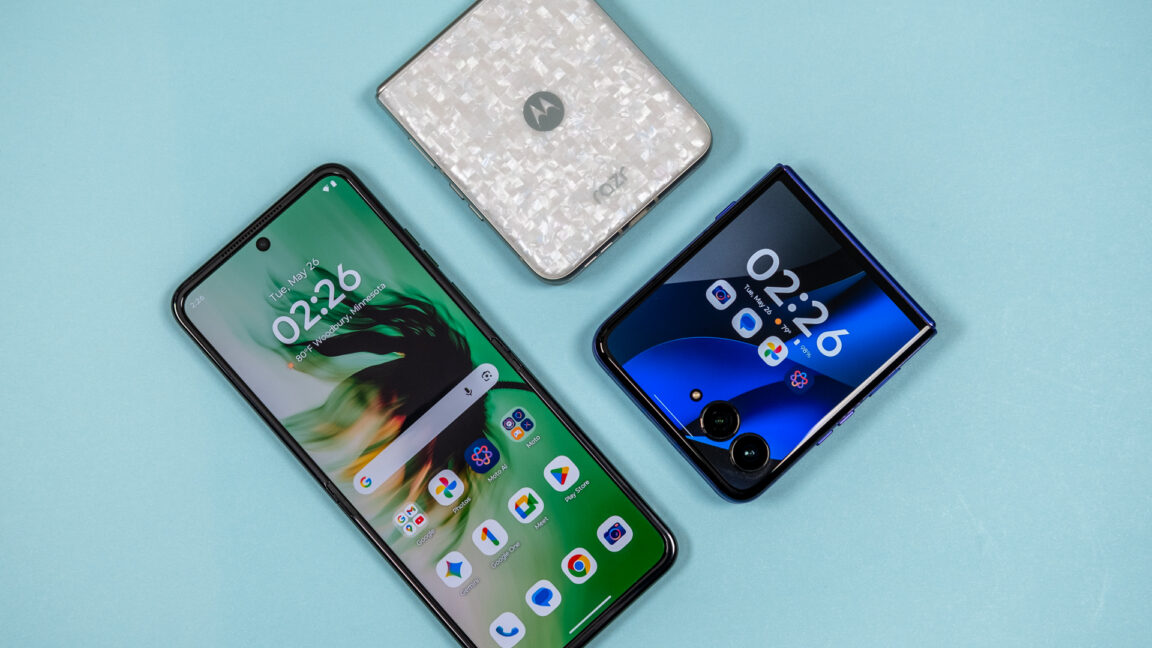
Motorola has spent the last few years leaning hard into charm — colorful finishes, tactile materials and clever outer screens — and in 2026 it pushed that vibe into two very different directions at once: luxurious flip phones and a book-style Razr Fold that finally takes the Razr name into Galaxy Z Fold territory.
Looks first, specs after
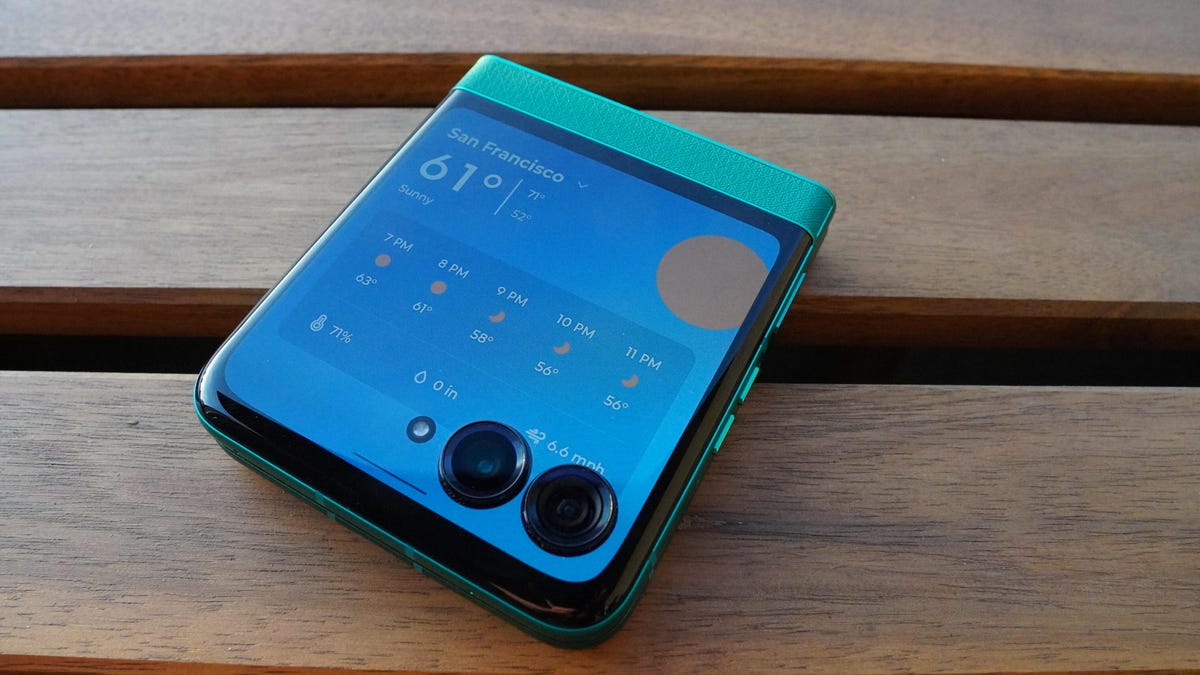
If you buy a Razr, you’re buying something people notice. Reviewers from Ars Technica to The Verge keep returning to the same point: these are among the prettiest phones you can buy. Alcantara and woven fabric backs, Pantone-tuned colors and delightfully usable cover screens make the Razr family more fashion statement than workhorse — and that’s part of the pitch.
But there’s real hardware behind the polish. The Razr Fold is Motorola’s first book-style foldable: an 8.1-inch LTPO inner display, a 6.6-inch outer pOLED, Snapdragon 8 Gen 5 silicon, and a 6,000mAh battery tucked into a surprisingly slim chassis. The Razr Ultra, meanwhile, keeps the flip form and brings a 5,000mAh battery and a fabric back that reviewers admit they can’t stop petting. The rest of the lineup spans from a budget-minded $800 Razr to the $1,900 Razr Fold.
If you want the launch checklist and early availability notes, we covered the preorders and why this Fold matters when it first arrived [/news/motorola-razr-fold-preorders-specs].
Durability, hinges and the foldable trust problem
Motorola’s hinges and materials are no longer experimental — the Fold uses a teardrop stainless design with titanium reinforcements and a zero-gap close — but the fault line in every headline remains the same: folds are a potential failure point. Reviewers note the crease is still visible, the IP48/IP49 rating leaves dust as a peril, and flexible OLEDs still have a long-term wear risk that only time (and real-world owners) can fully reveal.
Smart buyers should factor insurance into the cost. A $1,900 Fold that isn’t insured becomes a much riskier purchase if misfortune hits the hinge or the OLED.
Screens, batteries and performance where it matters
Across the lineup Motorola delivered strong panel chops. The Fold’s inner 8.1-inch LTPO panel hits 120Hz, the outer 6.6-inch display runs at 165Hz, and Motorola claims very high peak brightness numbers; real-world tests show those peaks are window-size dependent, but the screens are plenty bright and color-rich.
Battery life is a standout. Using silicon-carbon cell tech lets Motorola pack 6,000mAh into the Razr Fold and 5,000mAh into the Ultra — reviewers consistently praise day-plus stamina on the Fold and unusually long life for a flip phone on the Ultra. Wired charging is fast (Motorola quotes up to 80W wired on the Fold), but wireless TurboPower promises are muddier: the Fold lists 50W wireless in its specs, yet compatible 50W wireless chargers don’t exist for consumers today, leaving most users at modest wireless speeds.
Performance sits near the top tier: the Fold uses Snapdragon 8 Gen 5 and 16GB of RAM, while the Ultra and Razr+ take different chips and RAM mixes. That translates to snappy daily use and solid sustained performance thanks to an advanced cooling system, though Samsung’s Z Fold 7 still edges ahead in some raw benchmarks.
Cameras: capable, but not category-dominating
Motorola gave the Fold a proper triple camera stack — a 1/1.28-inch 50MP main, a 50MP ultrawide and a 50MP 3x telephoto — and reviewers called the results sharp and colorful. Video stabilization trails Samsung and Google in some tests, but photos are generally reliable and more color-accurate through the tele lens than on some rivals.
The flip Razrs lean on clever use of the outer screen for selfies with the main camera, and that approach still beats tiny punch-hole front sensors for many people who prioritize portrait shots.
Software, bloat and an annoying snag
Motorola’s Hello UI layers fold-friendly multitasking on top of Android 16: a customizable taskbar, saved multi-app layouts and a basic desktop mode over USB-C are all useful. Motorola also pledged seven years of OS and security updates — a welcome change if it sticks.
But there are downsides. The phones ship with more preinstalled apps than reviewers like, and The Verge reported a troubling incident where a third-party preloaded app briefly routed users through an affiliate link when opening Amazon — Motorola says it corrected that configuration. Still, the episode highlights the risk of extra, nonessential software on premium hardware.
The Razr Ultra also includes a hardware AI key that feels underused: reviewers called it gimmicky and less flexible than an action button that could be mapped to broader shortcuts.
Pricing, positioning and deal math
Prices are all over the map: Razr (base) at $800, Razr+ at $1,100, Razr Ultra at $1,499 and the Razr Fold at $1,899. That spread puts the base Razr in the “fun and affordable” camp, while the Ultra and Fold carry flagship premiums that reviewers found hard to fully justify.
If you’re hunting a deal, carriers and retailers are playing ball. T-Mobile’s headline-grabbing offer made the Fold effectively free with the Experience Beyond plan (no trade-in required), but CNET and others warned buyers to read the fine print: you’re trading $1,900 in credits for a pricey plan commitment. Best Buy offered up to $800 off with trade-in plus activation credits, and Motorola itself bundles trade-in discounts, free earbuds and Moto Tags to sweeten the purchase.
Deals will matter: Ars Technica suggested the base Razr at $800 is the strongest value if you want Razr vibes without the wallet shock. If you prefer the book-style experience, BGR called the Razr Fold a complete package that mostly holds up to Samsung and Google, even if it isn’t an outright leader on every metric.
For a broader take on Motorola’s strategy this year — how style, freebies and pricing fit together — see our earlier look at the brand’s Razr gambit [/news/motorola-razr-2026-fold-ultra].
Who should actually buy one?
- Buy a Razr Fold if you want a true tablet-sized inner display, long battery life and pen support, and you’re prepared to pay near-flagship money and consider insurance.
- Buy a Razr Ultra if you crave flip charisma, a tactile fabric back, and battery life that finally beats most old flip compromises — but only if $1,499 feels reasonable to you.
- Buy the base Razr if you want the look and cover-screen tricks without breaking the bank — Ars Technica thinks it’s the sweet spot of the lineup.
If you’re buying strictly for the best cameras, raw performance, or the most durable IP rating, Samsung and Google still have compelling arguments. If you buy for personality, unusual materials or a more playful software approach to the outer screen, Motorola’s Razrs will likely delight.
Motorola has made a persuasive move: it stretched a beloved design language into new forms while addressing the two things people care about most in 2026 — battery life and usable outer displays. Whether that’s enough to sway someone away from the tried-and-true Galaxy or Pixel hinges on how much you value style over the absolute top spec sheet.