Infinix is no longer treating its GT line like a side project. With the GT 50 Pro, the company is pushing hard on the one thing gaming-phone buyers actually notice in the real world: staying fast without turning into a hand warmer.
The new model has already been shown off in the Philippines ahead of its June 10 release, where Infinix leaned into its growing tie-up with MPL Philippines and Mobile Legends: Bang Bang. That’s not just marketing gloss. The GT 50 Pro has been positioned as the official gaming phone for MPL, and the brand is clearly hoping that tournament credibility will carry into the wider market.
Cooling takes center stage
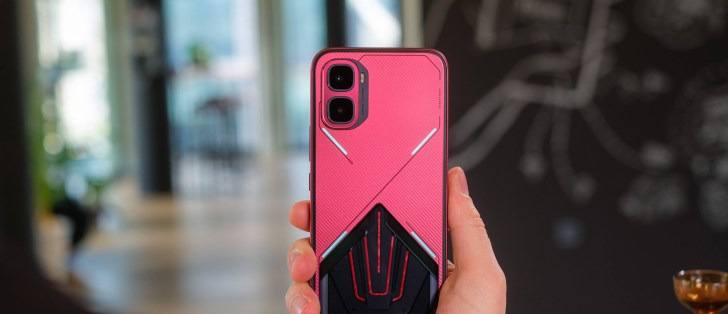
The headline feature is Infinix’s HydroFlow Liquid Cooling Architecture, a setup that combines an active cooling system, a large vapor chamber, and graphite layering to keep temperatures in check during long sessions. The phone even has a transparent back window that lets you see the cooling fluid moving inside — the sort of detail that sounds a little theatrical until you realize gaming-phone buyers often love theatrical.
In early hands-on use, the phone appears to back up the showmanship with substance. Reviewers and local testers reported noticeably stable temperatures during extended gaming, even in humid conditions. That matters because overheating has long been one of the simplest ways to ruin a good frame rate. Infinix is also bundling a one-year liquid cooling warranty with pre-orders in some markets, which is a pretty bold way to signal confidence in the hardware.
The phone’s cooling system is designed to work with the GT MagCharge Cooler 2.0 accessory, which can both chill the device and support wireless charging. In practice, it turns the GT 50 Pro into something closer to a dockable gaming rig than a typical phone, especially if you plan to spend hours in Android 17 Beta 3’s quieter future of faster charging and floating apps territory, where mobile gaming habits keep getting more demanding.
Built for gamers first, not apology-mode flagships
The GT 50 Pro doesn’t pretend to be an all-round luxury device. It looks like a gaming phone because it wants to be one. The back panel features customizable RGB lighting, crosshair-style accents, and a design language that borrows heavily from performance hardware and race-car styling. Infinix has also refined its pressure-sensitive gaming triggers, which can be mapped for competitive play and even everyday shortcuts like camera control or app launching.
That’s a useful shift. Too many shoulder buttons on phones feel like one-note gimmicks. Here, Infinix is trying to make them part of the phone’s daily rhythm, not just a party trick for FPS matches. Combined with the 144Hz AMOLED display and support for high-frame-rate gaming, the GT 50 Pro looks tailored for players who care about response time as much as they care about benchmarks.
Performance hardware is equally serious. Under the hood is MediaTek’s Dimensity 8400 Ultimate, paired with UFS 4.1 storage and 12GB of LPDDR5X RAM. That’s a strong combination for a midrange-to-upper-midrange gaming phone, and it’s exactly the sort of spec sheet that makes phones like the GT 50 Pro feel less like niche accessories and more like serious competition for pricier devices, including the kind of premium handsets that are increasingly expected to do everything well, as seen in Samsung’s Galaxy S26 Ultra privacy experiments.
A battery that refuses to quit early
Power users should appreciate the 6,500mAh battery. Infinix says the phone supports 45W wired charging, 30W wireless charging, reverse charging, and bypass charging for gaming sessions. That’s a lot of flexibility for a phone aimed at long play sessions and event coverage.
The software story is also more ambitious than Infinix’s older gaming phones. The GT 50 Pro runs Android 16 with XOS 16 and is promised several major Android upgrades over its lifespan, along with years of security support. That’s important because gaming phones used to get trapped in a strange middle ground: flashy hardware, then software support that looked like an afterthought. Infinix seems to be trying to leave that behind.
It helps that the phone is not limited to gaming theatrics. The camera setup includes a 50MP main camera with OIS, an 8MP ultrawide, and a 13MP selfie camera. No, it’s not chasing photography-phone bragging rights, but local first impressions suggest the camera is good enough for vlogging, interviews, and everyday sharing. A few quick controls, such as one-tap zoom shortcuts and video-focused presets, are aimed at making the camera less fussy when you’re moving quickly.
That angle is smart. A gaming phone that can also handle content creation has a better shot at being somebody’s only phone. It echoes the direction other brands are taking with more hybrid devices, including the camera-centric push behind Vivo’s X300 Ultra and X300s, where performance and imaging are no longer treated as separate camps.
Why the Philippines launch matters
Infinix has been especially active in the Philippines, where the GT 50 Pro was showcased at the MPL arena before launch day. The company used that stage to underline its esports ambitions, alongside the GT Watch 5 Pro, a co-branded smartwatch that adds heart-rate tracking and in-game data features. The broader idea is clear: build a small ecosystem around gaming, not just a single phone.
That approach fits the local market well. Filipino gamers are already used to brand partnerships tied to esports leagues, and Infinix has spent enough time in that space to know the audience responds to devices that feel like part of the scene rather than just another rectangle with RGB lights.
Early preorder promos in the Philippines are aggressive too, with bundles, discounts, and gaming accessories meant to make the first sale feel like an event. It’s the kind of launch playbook that works especially well when a phone has a sharp identity. Infinix has finally given the GT series that identity in full.
The GT 50 Pro is not trying to win over everybody. It’s trying to win over gamers who want real cooling, fast response, long battery life, and just enough polish to survive outside the game lobby. Judging by the early hands-on reports, it may be one of the few phones in its class that can talk the talk and keep its temperatures down while doing it.