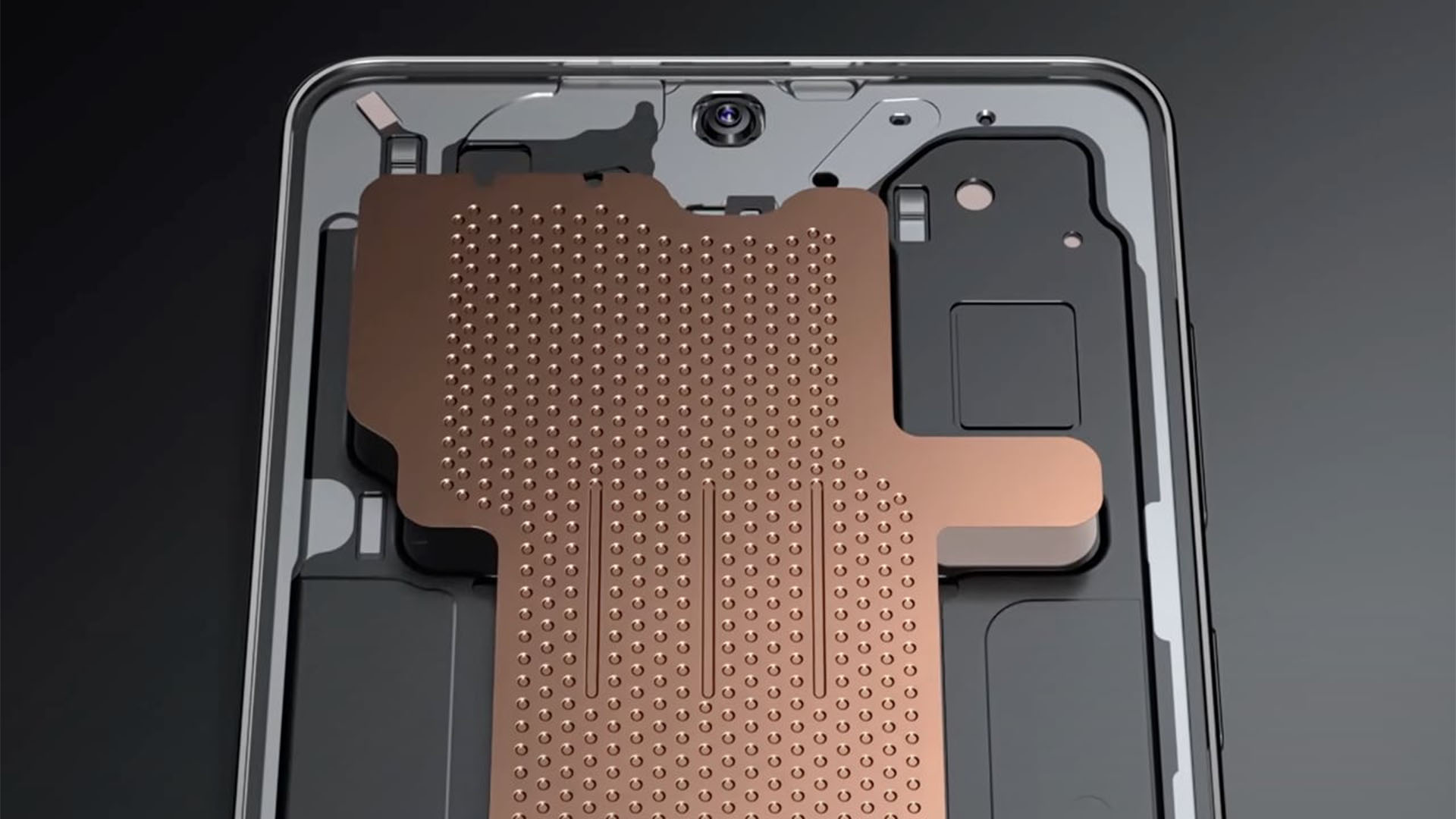
Samsung's battle with heat is getting a new weapon. According to recent South Korean reports, the company has quietly set up a team at its Production Technology Research Institute to explore active cooling systems — including liquid loops and small fans — aimed at keeping future Galaxy phones cooler for longer.
The context is simple: modern phone silicon is getting hungrier and hotter. Even with vapor chambers and the newer Exynos 2600’s Heat Pass Block innovation, flagship chips still throttle under sustained loads like gaming or on-device AI. That matters because throttling chops performance and often makes the phone feel sluggish during the very tasks buyers prize it for.
Why liquid cooling, and what it would change
Vapor chambers and graphite sheets can only do so much. Liquid cooling — a sealed loop that circulates coolant around the hottest parts of the chassis — is common in gaming laptops and has already appeared in a handful of niche smartphones from companies like REDMAGIC and Nubia. Those devices show the concept works: active systems can carry heat away faster and more evenly, which supports higher sustained frame rates and more consistent AI performance.
Reports say Samsung is weighing two active approaches: a quiet, hidden liquid loop that preserves design and water resistance, and air cooling using tiny fans (which risks noise and potential IP-rating compromises). Park Min, quoted in coverage of the research institute, noted the team is focusing on structures that connect directly to the chipset — in other words, cooling where it matters most.
If Samsung can shrink and seal a liquid cooler without sacrificing dust/water protection or adding unacceptable thickness and weight, it could materially reduce thermal throttling in future Galaxy flagships. That would be especially useful as on-device AI and more power-hungry GPUs become standard.
How this ties into Exynos and the S-series
Samsung's own silicon work gives it an advantage. The Exynos 2600 already introduced a Heat Pass Block design that, according to some tests, helps the chip run cooler than a competing Snapdragon under extreme cooling conditions. That improvement helped the Exynos variant of the latest Galaxy run more competitively in thermals and performance.
Samsung is reportedly continuing that momentum: there are hints the company plans side-by-side (SBS) packaging for a future Exynos 2700, and the Heat Pass Block concept may even influence rival chips. But better chip architecture only takes you so far — hardware-level cooling could be the next step to unlock consistent real-world performance on devices like the Galaxy S26 Ultra, which still relies on vapor chambers and can show thermal limits under heavy use.
Borrowing ideas from gaming phones (but hiding them)
Gaming OEMs have been pioneers here. REDMAGIC's visible cooling loops and Nubia's hybrid liquid/air setups prove that mobile liquid cooling is feasible. The difference for Samsung would be industrial design and scale: expect any Samsung solution to be concealed behind a clean backplate rather than proudly exposed, and engineered to preserve IP ratings.
That conceal-and-compact approach is important because mainstream Galaxy buyers want thin, premium-feeling devices that don’t rattle or let dust in. Active cooling that’s loud, bulky, or compromises water resistance wouldn’t fly for a Galaxy flagship — which is why Samsung’s researchers appear to be prioritizing low-noise, sealed solutions.
Practical limits and the tricky bits
Active cooling isn’t a silver bullet. It adds complexity: pumps, microtubes, additional thermal interface materials, and the need to keep everything reliable over years of charging cycles and temperature swings. There’s also cost and manufacturing complexity at scale. A hidden liquid loop will need guarantees against leaks (a non-starter), further testing for durability, and careful acoustic engineering if any moving parts are involved.
Air cooling with fans is simpler in some ways but brings obvious downsides: audible noise, moving parts that can fail, and harder-to-seal chassis. That’s likely why reports emphasize liquid systems first.
What to expect and when
At this stage, the work lives in R&D. Reports don’t attach a firm timetable to a commercial rollout, and Samsung’s priorities could shift as chip efficiency and software optimization improve. If a practical design does emerge, it would most likely appear first in a premium model where the engineering cost can be justified — not in cheapest midrangers.
Samsung has also been shipping other performance-focused updates to the Galaxy lineup — from chipset tweaks to software-level optimizations — and broader feature moves such as bringing new connectivity options to the S series. For example, Samsung confirmed Quick Share will talk to iPhones via AirDrop compatibility on the Galaxy S26, a sign the company still balances polish with technical leaps across the range Galaxy S26 will get AirDrop via Quick Share.
This research isn't just about bragging rights. If Samsung can pair smarter silicon like the Exynos 2600 with a practical, quiet cooling system, it could deliver flagships that maintain peak performance under the kind of sustained loads users increasingly expect: longer gaming sessions, heavier on-device AI, and more ambitious background processing. Whether Samsung will ship such a system soon — and whether it will keep the Galaxy sleek and dry in the process — remains an intriguing engineering problem to watch.