Pull into a charger, lean back, and cue up a 60fps video on the central screen. That scene—once the stuff of aftermarket hacks and luxury-car marketing—was one of the clearer signals Google laid out at I/O: Android Auto is getting a full refresh. It’s not just prettier; it’s smarter, more flexible, and built to stretch across the weird-shaped displays carmakers are shipping today.
A dash that finally fits
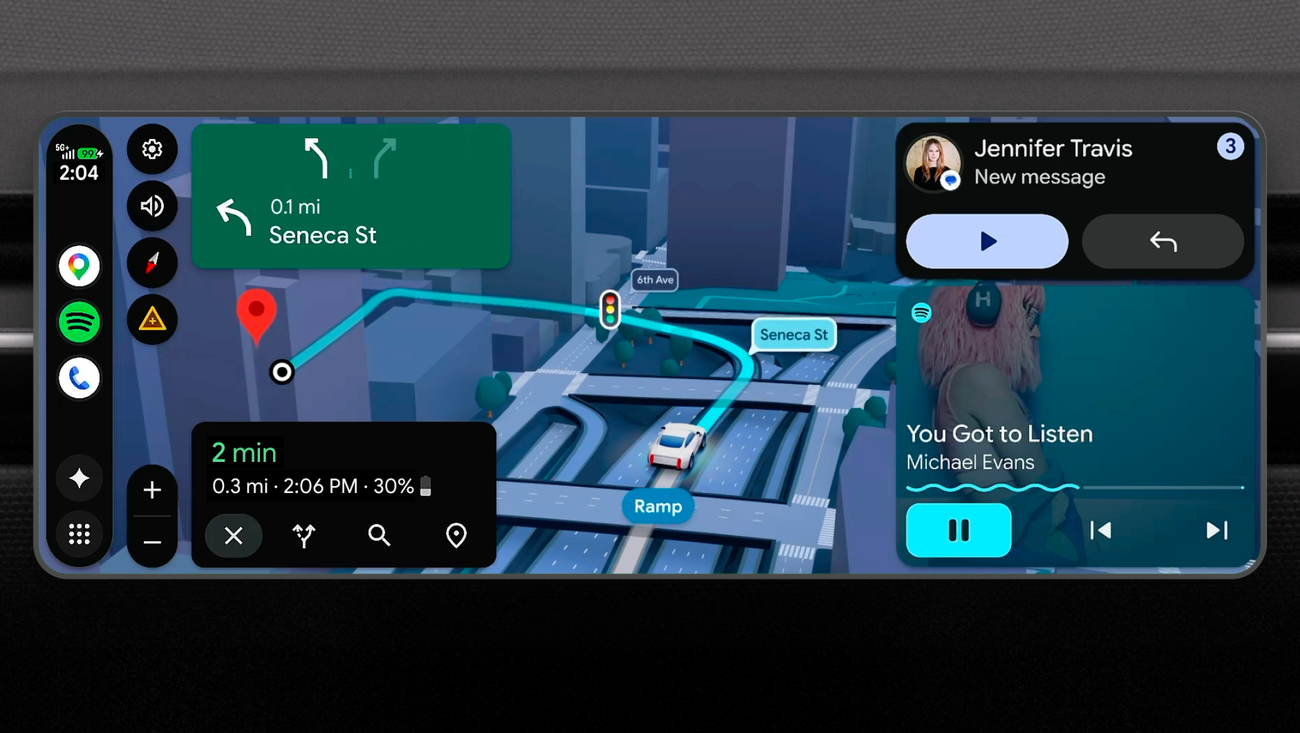
For years projection-based car systems shoehorned a rectangular UI into oddly shaped screens, leaving odd black margins or awkward scaling. Google is changing that with a Material 3 Expressive makeover that adapts to circles, ultrawide ribbons, trapezoids and everything in between. New fonts, animations and wallpapers bring the phone’s look to the dash, but the real payoff is practical: apps and maps can now truly fill the space instead of being boxed in.
Widgets arrive on the home screen too, giving quick access to favorite contacts, one-tap garage door controls, weather overviews and other glanceable info without swapping away from navigation. Think of it as a tidy cockpit dash rather than a distracted phone clone.
Maps that look—and behave—different
The Maps update, branded Immersive Navigation, is the largest Maps change Google says it has done in over a decade. It renders buildings, overpasses and terrain in vivid 3D and highlights lane markings, traffic lights and stop signs to help with trickier maneuvers. For cars that run Google’s native software, that visual upgrade is paired with live lane guidance that can use the vehicle’s forward camera to tell you which lane you’re actually in and nudge you during lane changes—a tighter integration made possible when Android runs the car rather than just mirroring a phone. (That native approach is part of the broader shifts discussed as Android Automotive evolves.)
Video in the car—safely
Yes, YouTube will be available through Android Auto in supported cars, playing full HD at 60fps when the vehicle is parked. Google stressed safety: content will automatically switch to audio-only the moment the car moves, provided the app supports background audio. Dolby Atmos spatial audio is being added too, so those audio-only transitions can still sound enveloping when you resume driving.
Support won’t be universal on day one. The initial roll includes manufacturers such as BMW, Ford, Genesis, Hyundai, Kia, Mahindra, Mercedes-Benz, Renault, Škoda, Tata and Volvo, with other partners and models following across 2026. Media apps like YouTube Music and Spotify will get visual touch-ups to match this more flexible canvas.
Gemini comes along for the ride
The AI assistant Gemini is getting friendlier in the car. Wider Gemini deployment lets drivers brainstorm, ask questions, and handle tasks by voice. Later this year, devices with Gemini Intelligence will get Magic Cue, which can pull context from texts, email or calendar items and surface helpful suggestions—reply to a friend with an address in one tap, for example.
Google also demoed hands-free ordering: tell Gemini to place a DoorDash order (even with customizations), confirm with a tap, and your meal will be waiting when you arrive. In vehicles with Google built-in, Gemini goes deeper—answering car-specific questions like identifying an indicator light or estimating whether a bulky item will fit in your trunk.
Rollout and reality checks
Google says more than 250 million cars currently support Android Auto and that these upgrades will roll out through the year. That’s a big install base, but real-world rollouts are messy. There have already been reports of the Android Auto experience tripping up some Pixel and Galaxy S26 owners during past updates; expect some bumps as manufacturers, app developers and phone vendors align on new behaviors and permissions. If you’ve experienced odd disconnects on Android Auto, those older issues are a reminder this kind of transition can take time to stabilize—especially when it touches USB, Bluetooth and deeper car integrations simultaneously. See details on those recent hiccups in how updates have affected certain phones in previous coverage.
Why this matters
A few things converge here: better in-car screens, richer phone software, and smarter AI. Google’s push to make Android Auto fill unconventional displays means automakers can experiment with bold interior designs without breaking compatibility. Immersive maps and lane-aware guidance could make complex driving situations easier to handle. And video plus high-fidelity audio changes how people might use time parked in their cars—charging stops, long waits, or road-trip breaks become entertainment pockets.
There are trade-offs to watch. Privacy and data flow between phone, cloud AI and vehicle systems will be worth scrutinizing as Gemini learns context from messages and calendars. Safety advocates will keep an eye on how seamless video-to-audio transitions are implemented and whether any functionality could create temptation while the car is moving.
If you drive a newer BMW, Ford, Genesis, Hyundai, Kia, Mercedes-Benz or one of the other early partner brands, expect previews later this year. For everyone else, consider this a clear signal: our cars are becoming more than transportation gadgets. They are the next battleground for personal computing—and for Google, a place to marry Maps, media and generative AI into a single driving experience.