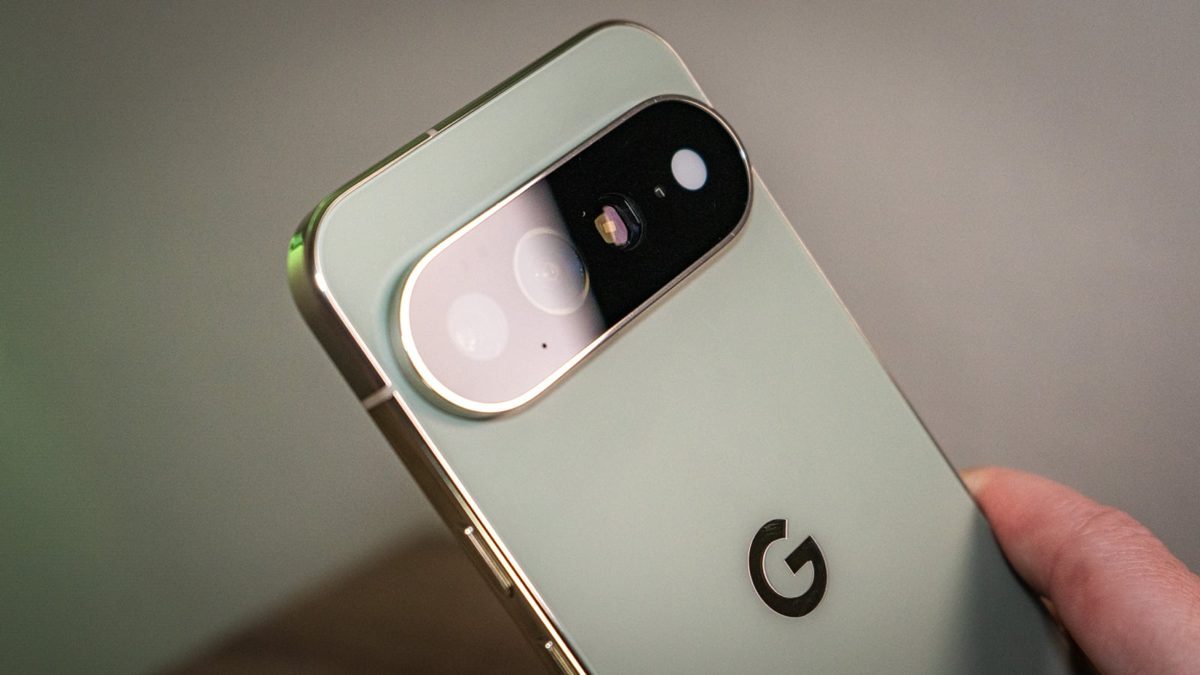
Google has a video problem on its hands, and it’s looking a lot less like a small bug and a lot more like a design choice.
The Pixel 11 Pro and Pixel 11 Pro XL can record 4K video at 60 frames per second on-device, which is solid enough on paper. But the higher-end tricks Google keeps talking up — especially 8K processing and boosted video modes — still lean on Video Boost, the cloud-powered feature that uploads footage to Google’s servers for post-processing. That means the phone itself is only doing part of the job. For everything else, you need a good connection and a little patience.
That stands in sharp contrast to rivals like Apple and Samsung. The iPhone 17 Pro can handle up to 4K120 locally, and Samsung’s Galaxy S26 Ultra can do the same without handing off the heavy lifting to the cloud. In other words, those phones are built to process video in real time, right there on the device. The Pixel is still asking Google’s servers to fill in the gaps.
Where the Pixel runs out of road
This comes down to priorities. Apple’s A19 Pro and Qualcomm’s Snapdragon 8 Elite Gen 5 are tuned for sustained, high-throughput media work. Google’s Tensor G6, by comparison, is built around Gemini features, Pixel-only software tricks, and AI smarts that sound impressive in demos but don’t always translate into brute-force performance.
That difference matters when you’re trying to push serious video workloads. The Tensor G6’s GPU architecture simply doesn’t have the same headroom as Apple’s or Qualcomm’s silicon, and that shows up in everything from gaming to rendering. High-frame-rate local video processing would almost certainly run hotter, throttle faster, and expose the chip’s limits in a way Google would rather avoid.
Thermals make the problem even messier. Tensor chips have had a reputation for running warm since the Pixel 6 era, and Pixel users know the feeling all too well. A phone can only keep up with demanding work for so long before it has to slow down to protect itself. That’s fine for background AI tricks. It’s much less fine for real-time video capture.
Google is not alone in worrying about heat, of course. Apple and Samsung spend a lot of engineering effort on cooling, from vapor chambers to redesigned internal layouts that move heat away faster. Google, meanwhile, seems content to let the cloud carry part of the load. That’s clever in a software sense, but it also raises a pretty simple question: if the hardware can’t do it consistently on its own, is the feature really in the phone at all?
The cloud dependency has already shown its awkward side elsewhere. A Pixel 11 Pro video bug causing static sounds in recordings has users hearing crackling bursts when using Video Boost, and Google says a fix is coming in a Camera app update in the coming weeks. It’s the sort of problem that makes cloud-assisted features feel less futuristic and more fragile.
A feature that only works if you remember to turn it on
There’s another wrinkle: Video Boost isn’t automatic. If you want the best possible results, you have to toggle it on before shooting, and in some cases turn it on again each time you open the Camera app. That’s not exactly elegant. It’s the kind of step people forget in real life, especially when the moment worth recording is already happening.
And when it works, it’s still not truly instant. The phone uploads the footage, Google’s servers process it, and then you wait for the final version to come back. That may be acceptable for a carefully planned clip, but it’s a strange fit for a premium phone that costs $1,100 or more. If you’re paying flagship money, it’s reasonable to expect the device to stand on its own two feet.
This is also why the Pixel 11 Pro feels different from phones that treat imaging as a self-contained hardware challenge. Apple leans into on-device media engines. Samsung keeps refining its chip-and-cooling combo to handle big workloads locally. Google, by contrast, keeps selling a vision where the cloud is part of the camera pipeline. That can be powerful, but it also means your expensive phone is only as good as its network connection and Google’s server-side systems.
The broader irony is that Google’s Pixel line has gotten very good at making software seem magical. It’s just that magic has a habit of disappearing when the signal drops. That’s a very different promise from the one made by hardware-first flagships, and buyers can feel the difference the moment they try to record something demanding in the real world.
For people already tracking the Pixel 11’s other quirks — from the trade-offs in Google’s new flagship lineup to the camera features that don’t fully work offline — the video story fits an uncomfortable pattern. Google keeps pushing smart, cloud-assisted features, but the more you depend on those extras, the more obvious the hardware limits become.
That’s the real issue here. The Pixel 11 Pro isn’t short on ideas. It’s short on local muscle. And for a phone that wants to compete with the heaviest hitters in the business, that’s a problem you can’t fully solve with server time.