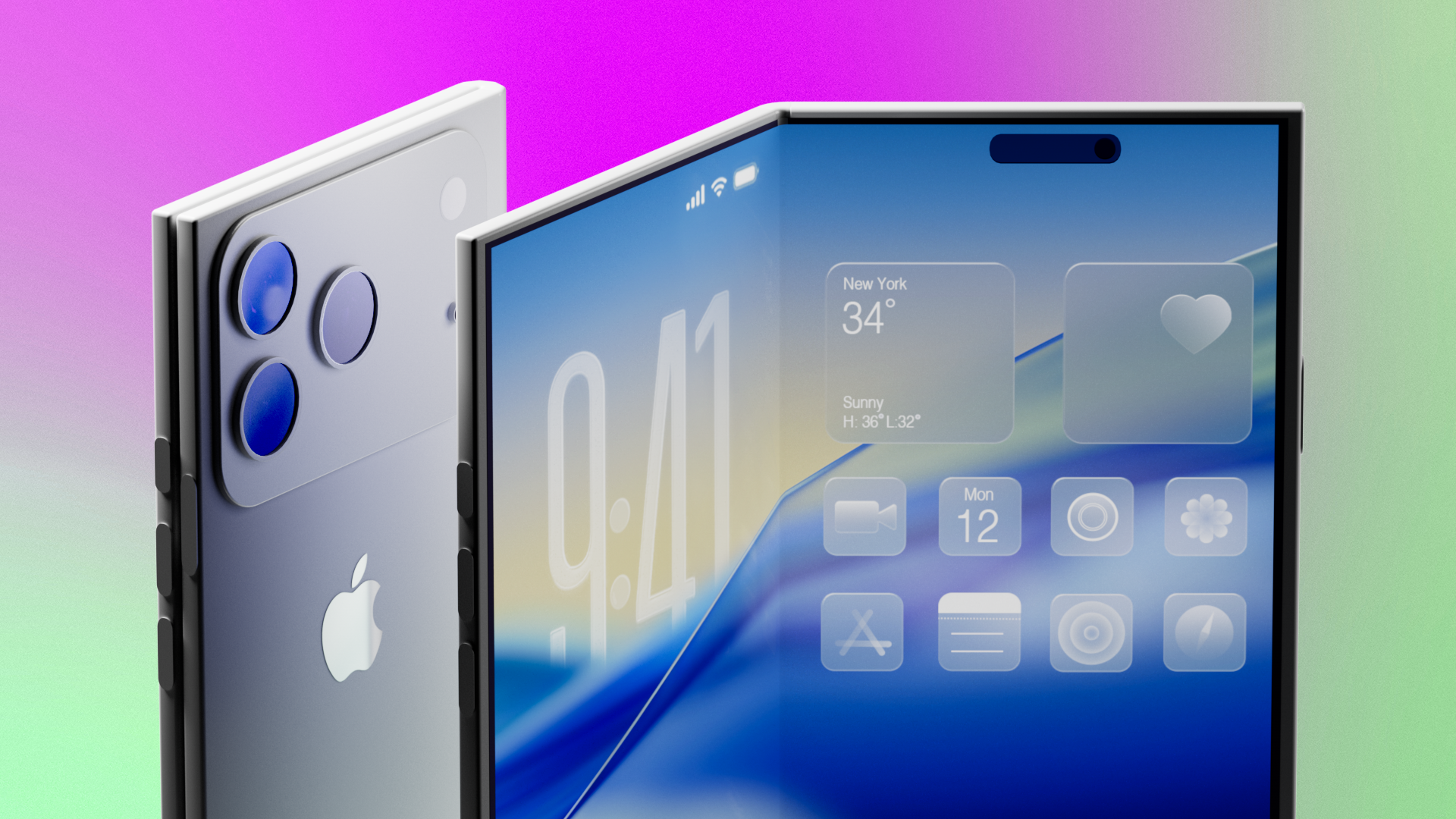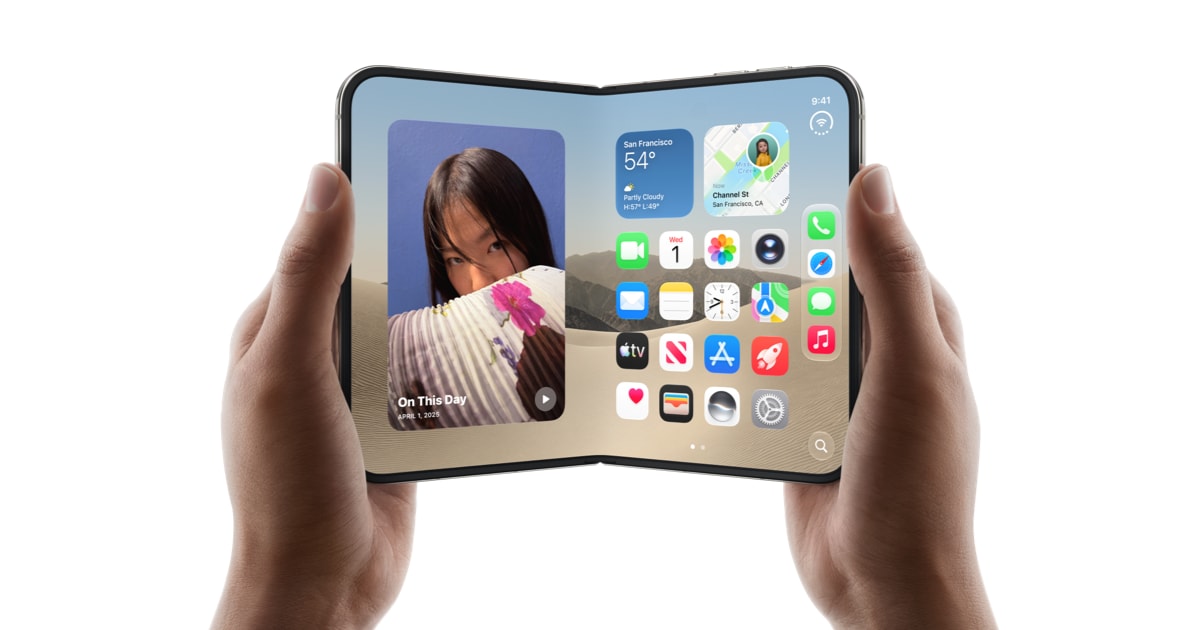
Apple has spent years circling the foldable-phone idea without actually shipping one. Now it has finally stepped into the category with the iPhone Duo, a book-style foldable that opens to a 7.6-inch display and folds down into something closer to a pocketable square than a traditional slab phone.
The headline feature is obvious the moment you see it: this is Apple’s first phone that changes shape. Open it up and you get the largest display ever on an iPhone, a matte-finish panel Apple says cuts glare and makes the crease less noticeable. Close it, and the outer screen is a 5.4-inch panel meant for one-handed use, quick replies and the sort of casual tasks people usually save for a small phone.
Apple is leaning hard into the idea that the Duo should feel less like a novelty and more like an iPhone that has learned new tricks. Both screens share the same aspect ratio, so content should move more smoothly between folded and unfolded modes. iOS 27 has been reshaped around that behavior, moving controls to the side to free up more room for content and adding a split-view multitasking system that lets two apps run side by side for the first time on iPhone.
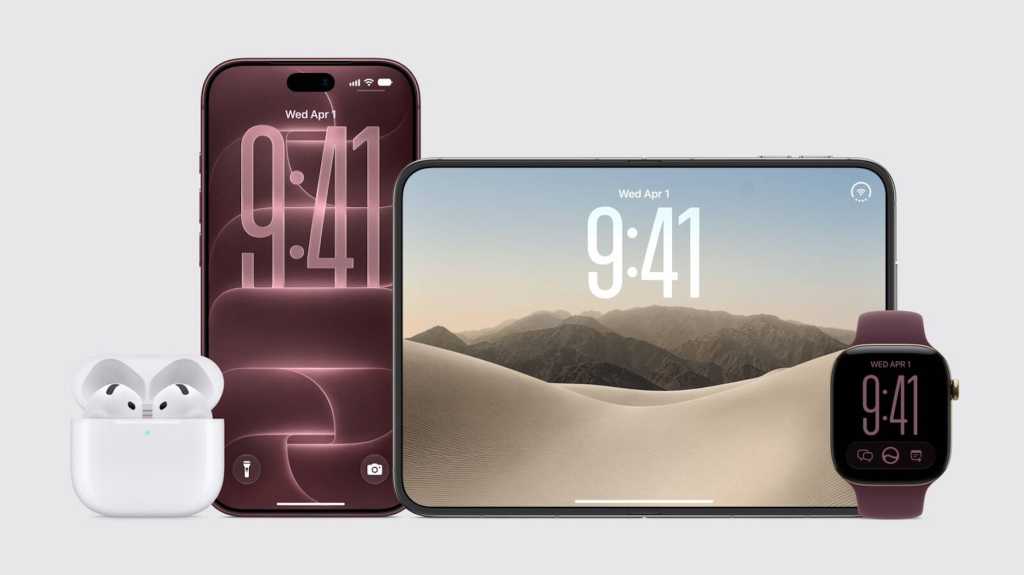
That matters because foldables have often been sold on specs and spectacle, then undermined by awkward software. Apple is clearly trying to avoid that trap. It says apps from Netflix, Zoom and Slack already take advantage of the larger canvas, while the system itself adapts when the phone is partially folded, propped up or turned on its side. The company even reworked StandBy so it can turn the Duo into a clock, widget hub or photo frame whether or not it’s charging.
The hardware, predictably, is all about engineering bravado. Apple says the device is built from grade 5 titanium, uses Ceramic Shield on the back and Ceramic Shield 2 on the front, and is IP68-rated for water and dust resistance. The hinge is made from more than 100 components, and the company says custom adhesives inside the display help layers move like pages in a book to reduce stress over time. It’s the kind of language Apple usually reserves for watches, laptops and other products it wants to frame as overbuilt in the best way.
If you’ve followed Apple’s recent phone strategy, the Duo fits into a broader pattern: the company has been pushing harder on redesigns, privacy messaging and AI-driven software while keeping a tight grip on the overall experience. That’s part of why the foldable lands as such a big moment. Apple has not just launched a new phone; it has launched a new category in the middle of a year that already includes fresh iPhone 18 Pro rumors and continued chatter about the future of the iPhone Fold.
Cameras built for folding, not just folding for cameras
The camera system is where the design starts to feel genuinely new rather than merely expensive. The main 48MP Fusion camera can shoot full-resolution photos, default to 24MP for smaller file sizes and use an optical-quality 2x Telephoto crop. The ultra-wide camera is also 48MP, and the front camera can frame selfies in any orientation without asking you to rotate the device like it’s 2018.
Then come the foldable-specific tricks. Smart Take uses on-device AI to catch the moment when people are actually posed instead of making them wait for a timer. Duo Preview shows the shot on the outer screen so subjects can see how they’re framed. Kid Cue tries to get children to look at the camera by playing Peanuts animations. Duo FaceTime lets people nearby jump into a call using the outer screen, so everyone doesn’t have to crowd around one display.
Apple is also pushing video features: 4K 120 fps recording in Dolby Vision, Cinematic effects added after capture and a propped-up time-lapse mode that doesn’t need a tripod. These aren’t just checkbox upgrades; they’re the sort of features that make a folding phone feel a little less like a compromise and a little more like a tool.
The closest comparison in recent years may be Samsung’s foldables, which have been steadily refining the form factor while experimenting with privacy displays, multitasking and compact outer screens. But Apple is arriving late with the advantage of seeing where the category stumbled. It’s also arriving with a price that signals this is not a mass-market experiment: the iPhone Duo starts at $1,999.
A20 Pro, two batteries and a lot of confidence
Inside, Apple has paired the new phone with the A20 Pro chip, the same silicon used in the iPhone 18 Pro models. Apple says the Duo can deliver up to 35 percent better sustained performance than the iPhone 17 Pro, with a 6-core CPU, a 7-core GPU and a new Neural Engine designed to handle heavier on-device AI work. A custom vapor chamber sits at the center of the thermal design, helping the phone keep its speed under pressure.
Battery life is one of the more interesting claims here. Apple says it has placed a high-energy battery on each side of the device and used software to make them behave as one system. The result, according to Apple, is up to 31 hours of video playback on the inner display and up to 44 hours on the outer display. Fast charging is on board too, with a claimed 50 percent charge in about 20 minutes.
Wireless connectivity gets its own hardware treatment. The Duo is eSIM-only worldwide, uses Apple’s N1 wireless chip for Wi-Fi 7, Bluetooth 6 and Thread, and ships with the new C2 modem system, which adds mmWave support in the U.S. Apple is also introducing iPhone Handoff in some markets, making it possible to switch between two iPhone models tied to the same number.
That sort of ecosystem play is classic Apple: the phone is the story, but the frictionless handoff between devices is part of the pitch. It’s also the kind of detail that will matter to people already locked into Apple’s software stack, especially if they’re the sort of users who jumped at iOS 27’s AI and multitasking push.
Siri gets a reset, too
The Duo is also the showcase for Siri AI, a new version of Siri that Apple is rolling out in beta with iOS 27. Apple says it can use personal context across messages, mail and photos, understand what’s on-screen and respond in a more conversational way. It can also revisit previous conversations through a dedicated app, with history synced privately through iCloud.
Apple Intelligence is folded into the pitch as well, with new image-editing tools, photorealistic Image Playground output and a Safari feature called Notify Me that watches web pages for changes. If that sounds like a lot, it is. Apple is using the Duo to bundle together the company’s current obsessions: folding screens, AI features and software that tries to feel smarter without becoming visibly chaotic.
The catch, of course, is that the phone is expensive, and it arrives in a market where foldables are no longer rare. The iPhone Duo will be available in star white and night sky, with 256GB, 512GB, 1TB and 2TB storage options. Preorders begin October 16, and sales start October 23 in more than 70 countries and regions.
There’s also a small pile of accessories, because this is Apple: a Duo Folio with a kickstand and a thin two-part case, both designed around MagSafe and the company’s new foldable dimensions.
For a product Apple has spent years hinting at, the iPhone Duo is surprisingly direct. It doesn’t try to reinvent the idea of a phone from scratch. Instead, it takes the familiar Apple formula — polished hardware, tightly controlled software, expensive materials, a lot of confidence — and stretches it into a shape the company had never shipped before. In the demo room, at least, it seems to work.