Apple finally showed the rebuilt Siri it has been promising for years. Then, almost immediately, it put a gate in front of it.
The first developer beta of iOS 27 is now out, but anyone eager to try Siri AI will have to join a waitlist before the assistant actually turns on. On the iPhone, the process lives inside the new Siri section of Settings: install the beta, tap Join Waitlist, and wait for Apple to flip the switch. It sounds a lot like the staged rollout Apple used for Apple Intelligence last year, which suggests the company is still being careful about how much of this new system it exposes at once.
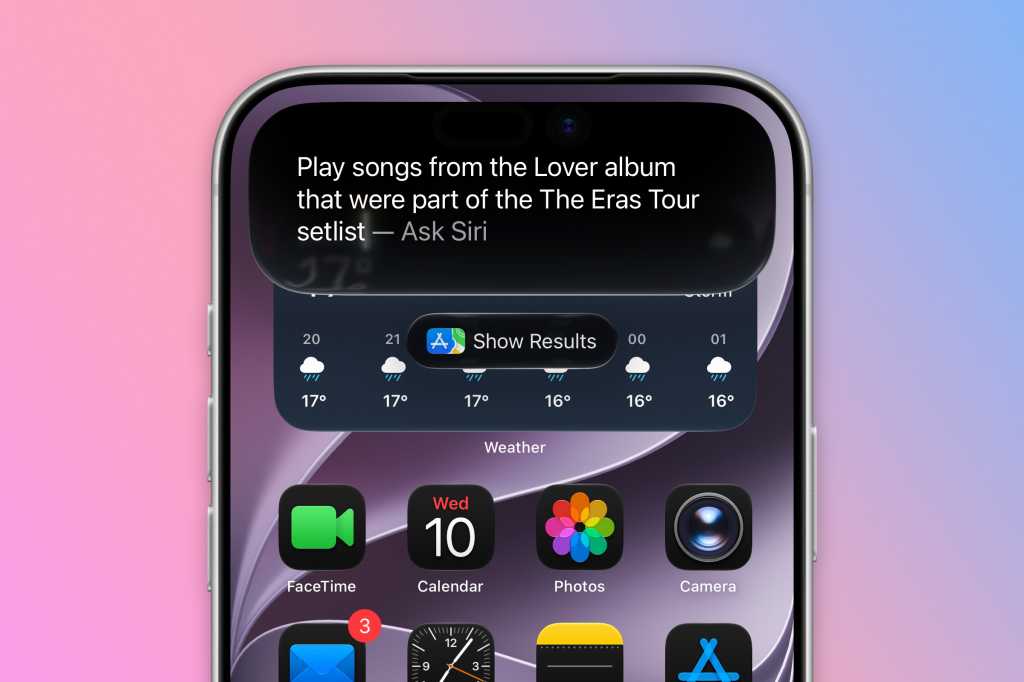
That caution makes sense. Siri AI is Apple’s most ambitious attempt yet to turn its once-clunky assistant into something closer to a real conversation partner. In demos at WWDC 2026, Apple showed Siri handling back-and-forth exchanges, reading on-screen content, pulling details from messages and mail, and carrying out actions across apps. Ask about a concert, for instance, and Siri can surface dates, set a reminder, and even help with the next step without forcing you to jump between screens.
Apple is also giving the assistant a more visible identity. Siri AI gets its own app, customizable voice options, and a deeper role inside the system. It’s a sharper, more modern pitch than the Siri that debuted in 2011 and gradually fell behind the new generation of AI chatbots. If you want a sense of why Apple is treating this as a reset rather than a routine update, look at the company’s long-overdue Siri reboot and the broader iOS 27 stability and AI push.
A waitlist, but also a signal
The waitlist is not just a beta quirk. It tells you Apple is rolling out Siri AI as a controlled release, not a free-for-all. That matters because this assistant is built to do more than answer trivia. It can access personal context, route requests through different AI models depending on the task, and act on your behalf inside Apple’s ecosystem. In other words: more powerful, but also more sensitive.
That sensitivity shows up in Apple’s privacy-first framing. At its WWDC tech talk, the company said Siri AI and the wider Apple Intelligence system use a model-routing architecture that sends requests either to an on-device model or to the cloud, depending on how much computing power and personal data a task needs. Apple calls that system orchestrator the core of its privacy design.
The cloud side is where things get especially interesting. Apple said its most advanced model, AFM Cloud Pro, is comparable to Google’s Gemini frontier models and runs on Nvidia GPUs in the cloud. That means Apple’s new AI push is not purely an in-house story, even if the company is still trying to frame it that way. CNBC reported that Apple is working with both Google and Nvidia behind the scenes, which is a big shift for a company that has spent years emphasizing its own silicon and tightly controlled software stack.
That broader model strategy also echoes Apple’s recent habit of borrowing strength without saying so too loudly. The company has already leaned on outside tools in pieces of its AI workflow, and the new system seems designed to route some jobs to the best available engine rather than forcing everything through a single Apple-made model. It’s pragmatic. It’s also a little less tidy than the keynote marketing would like.
Who gets it — and who doesn’t
Here’s where the excitement gets trimmed back. iOS 27 itself supports older iPhones, going back to the iPhone 11. Siri AI does not.
Apple says the new assistant requires an iPhone 16 model or later, or an iPhone 15 Pro or iPhone 15 Pro Max. That leaves a lot of recent buyers on the outside looking in, even if they’ll still get the software update. And some of Siri’s most advanced features, including the most expressive voices and the biggest jump in dictation accuracy, appear to be reserved for Apple’s newest hardware tier.
The split is even stricter on iPad, Mac, and Vision Pro. Apple’s most capable AI features need newer chips and, in some cases, a fairly chunky memory floor. It’s the kind of hardware gating that has become increasingly common in the AI era, but it will still annoy anyone who bought a premium device not very long ago.
Then there’s Europe. Apple says Siri AI will not launch on iPhone or iPad in the European Union with iOS 27 and iPadOS 27, blaming regulatory requirements tied to the Digital Markets Act. The company says it offered a workaround and a phased rollout, but the European Commission rejected it. EU users can still get Siri AI on Mac, Apple Watch, and Vision Pro, but not on the devices most people use most often. China, meanwhile, remains on hold as Apple works through local regulatory approvals.
That tension between capability and control is all over this release. Apple wants Siri to be smarter, more personal, and more useful, but it also wants to keep the system fenced in enough to preserve its privacy story. Those goals are not exactly enemies. They’re just not always comfortable roommates.
More than Siri: iOS 27 gets practical in a hurry
Siri may be the headliner, but Apple packed iOS 27 with a batch of features that are easier to understand and, honestly, easier to imagine using every day.
AirPods finally get a real custom EQ, letting users tweak the sound instead of living with Apple’s default tuning. Safari is adding tools to monitor webpages for changes, group tabs more intelligently, and even create simple custom extensions from a text prompt. The Passwords app can now fix weak logins on supported sites by generating and swapping in a stronger password for you. And Apple says its parental controls are getting a lot more serious, with new browsing permission tools, updated screen-time limits, and content protections designed to give parents more control without making the phone miserable for everyone involved.
There are also some quality-of-life improvements that may end up mattering more than the flashier AI demos. Apple says apps open up to 30% faster, photos load more quickly after capture, and AirDrop transfers move faster too. On iPad, file transfers to and from external storage are supposed to be dramatically quicker. Apple even used an iPhone 11 Pro Max in one of its performance tests, which is a nice reminder that some of these gains are meant for older hardware, not just the newest Pro models.
That’s the sort of thing Apple tends to tuck under the AI noise, but it often lands better with real users. A smarter assistant is intriguing. Faster app launches, better tab management, and fewer password headaches are the stuff people actually notice on a Tuesday.
Investors heard the same keynote and heard something different
Wall Street’s reaction was a little cooler than Apple’s stage show.
Apple shares slipped after the company unveiled Siri AI and the iOS 27 update, with some investors apparently deciding that the announcement was less of a surprise than a confirmation. That fits the familiar “buy the rumor, sell the news” pattern, especially after months of speculation that Apple would use WWDC 2026 as its AI reboot.
The market wasn’t necessarily dismissing the technology. It was reacting to expectations. Apple has spent a long time promising a smarter Siri, and the demo finally arrived with enough polish to impress without enough shock value to send the stock flying. Investors also seem to be waiting on proof that Apple can execute at scale, especially given the company’s earlier delays in getting its assistant overhaul out the door.
That skepticism may linger until people can actually use Siri AI, not just watch a keynote clip. The waitlist alone is enough to slow the momentum. And in AI, momentum matters.
For Apple, though, the more revealing detail may be what this launch says about the company’s posture. It is no longer pretending it can build the whole stack in a vacuum. It is partnering where it needs to, protecting privacy as a core selling point, and using a staged rollout to keep the whole thing from wobbling on day one. That’s not as neat as a flashy one-and-done reveal, but it may be closer to how Apple actually ships important software now.
If you’re keeping track of Apple’s AI arc, this release fits neatly beside the company’s recent iOS feature cleanups and quiet fixes, where small improvements often end up reshaping the phone more than the headline feature does. Siri AI is the centerpiece. The surrounding details may decide whether it feels like a true leap or just Apple catching up, carefully, on its own schedule.