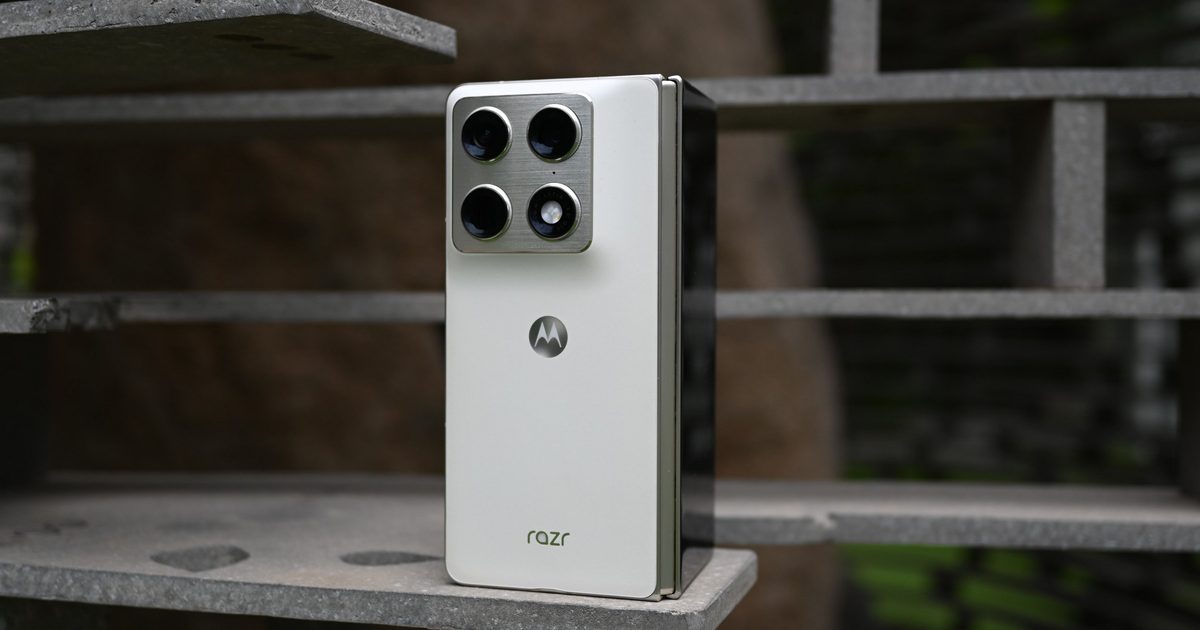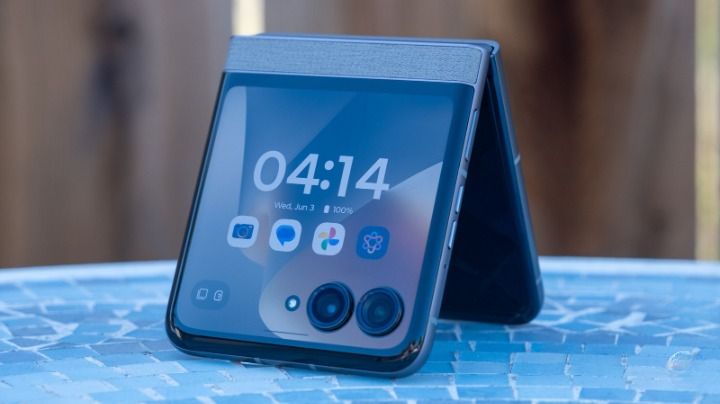
Motorola spent years treating foldables as a flip-phone story. With the Razr Fold, it finally steps into Samsung and Google’s book-style arena — and it does so with a phone that looks far less experimental than the company’s earlier attempts.
That matters because this isn’t just another niche device for early adopters with deep pockets. It’s Motorola trying to prove it can build a full-size foldable that gets the essentials right: a useful outer screen, a large inner display, a battery that doesn’t feel like an apology, and cameras that don’t collapse under the weight of the format. On paper, at least, it gets surprisingly close.
The Razr Fold pairs a 6.6-inch cover display with an 8.1-inch inner panel, both LTPO and both tuned for high refresh rates. The outer screen is a 21:9 panel with 1080p+ resolution and up to 165Hz, while the inner display stretches to a squarish 2,232 x 2,484 resolution and can refresh at up to 120Hz. Motorola also gives the optional Moto Pen Ultra stylus support on both screens, which is a nice bonus in a class where most stylus talk is still mostly theoretical.
Under the hood, Motorola uses the Snapdragon 8 Gen 5 rather than the Elite version, but the real headline is the battery. A 6,000mAh silicon-carbon cell gives the Razr Fold a capacity lead over the Galaxy Z Fold7 and Pixel 10 Pro Fold, and the charging numbers are equally aggressive at 80W wired and 50W wireless. That kind of endurance is exactly where foldables have historically fallen short, which is why Motorola’s gamble feels more practical than flashy. It also helps explain why Motorola’s Razr Fold: pre-orders, specs and why this one matters drew so much attention before launch.
Cameras that try to earn the premium
The camera setup is more serious than you might expect from a brand best known for stylish flips. Motorola fitted the Razr Fold with a 50MP main camera using a large 1/1.28-inch sensor and optical stabilization, plus a 50MP periscope telephoto with 3x zoom and another 50MP ultra-wide camera with a 122-degree field of view. There are two selfie cameras too: 32MP on the cover display and 20MP on the inside.
That’s a lot of hardware for a foldable, and it places the phone in more confident territory than the camera compromises that often come with this form factor. It doesn’t suddenly turn the Razr Fold into a dedicated camera phone, but it does give Motorola a more credible pitch than “good enough for social media.”
Durability is another area where the company seems to have listened closely to years of foldable complaints. The phone carries IP48/IP49 protection, which should help with water exposure and jets, and Motorola says the folded thickness comes in at 10.1mm with a weight of 243 grams. That puts it in a fairly reasonable middle ground: not the thinnest book-style foldable around, but not a brick either.
Pricing, though, is where the conversation gets real. At EUR 2,000, GBP 1,800, INR 150,000, USD 1,900 and CAD 2,700, the Razr Fold is absolutely a premium device. It lands a little below Samsung’s newest Fold at launch, but not by enough to make anyone feel like they’ve stumbled onto a bargain. In other words: Motorola has priced this as a serious flagship, not as a curiosity.
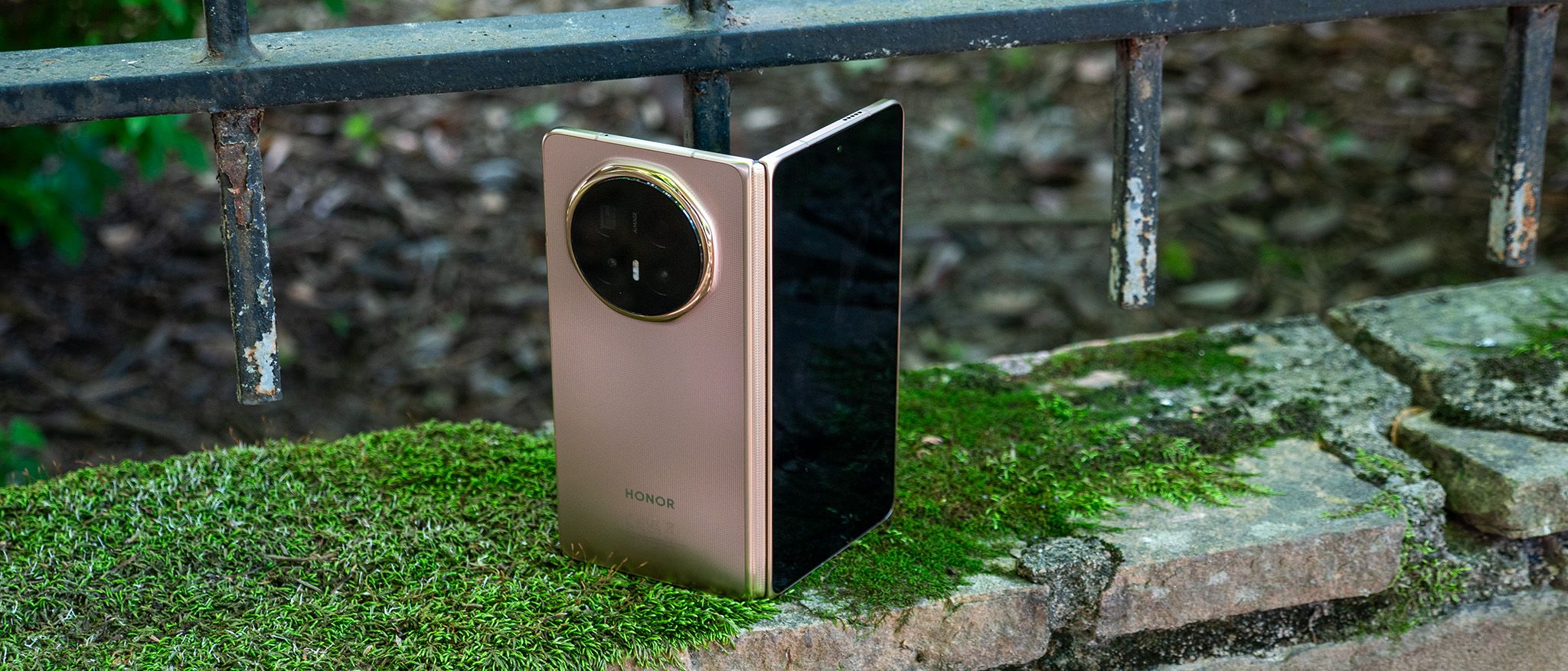
That’s partly why the launch lands in such an interesting place. Book-style foldables are still a relatively crowded conversation in Europe and India, where Honor, Samsung and others are all trying to claim the same high-end buyer. In the US and Canada, the field is narrower, which should help Motorola stand out, even if it also means the company will be judged more harshly on every missing feature. Samsung’s own foldable pricing has been creeping upward too, as seen in Samsung is quietly hiking prices on its top Galaxy models — for now, only in Korea, so Motorola is entering a market where “expensive” is increasingly the default setting.
The bigger question isn’t whether the Razr Fold is impressive on spec sheets. It is. The question is whether Motorola has built something people actually want to carry every day. The early signs are promising. The displays are large, the battery is unusually bold, and the camera hardware doesn’t feel like an afterthought. That combination gives Motorola a more convincing first book-style foldable than many expected.
It also gives the company a useful companion to its flip phones, which remain the more recognizable part of the Razr family. If you’re comparing Motorola’s two folding identities this year, the new Razr Fold is the one that feels like a statement of intent, while the updated Razr Ultra keeps polishing the company’s style-first side of the lineup — a theme Android Authority explored in its comparison of the Razr Ultra and Galaxy Z Flip 7. One is about flair, the other about ambition.
Motorola still has plenty to prove. Software support, long-term hinge durability and real-world camera consistency all matter more once the launch excitement fades. But this first pass shows a company that finally understands why people buy large foldables in the first place: not for novelty, but for a phone that feels like a tablet when you need it and a regular handset when you don’t.
And that, frankly, is the first time Motorola’s foldable story has sounded this complete.