Apple spent WWDC trying to answer a question it has been dodging for two years: can Siri still matter in the age of ChatGPT?
The company’s answer is a very Apple one. It isn’t betting on a flashy chatbot race or a splashy consumer AI app that lives on its own. Instead, it is rebuilding Siri into something closer to a system-level assistant — one that can see what’s on your screen, pull from your apps, handle multi-step requests, and follow you across iPhone, iPad and Mac. Apple is also tying that overhaul to a new version of its operating software, iOS 27, plus broader changes to Apple Intelligence and the company’s third-generation foundation models.
The result is ambitious, but also telling. Apple is finally showing the kind of AI plumbing investors and users have been waiting for. It is also making plain how much of the heavy lifting now depends on Google’s Gemini models.
Siri stops pretending to be a voice-only tool
The biggest change is not just that Siri is smarter. It is that Apple is treating Siri like a real interface.
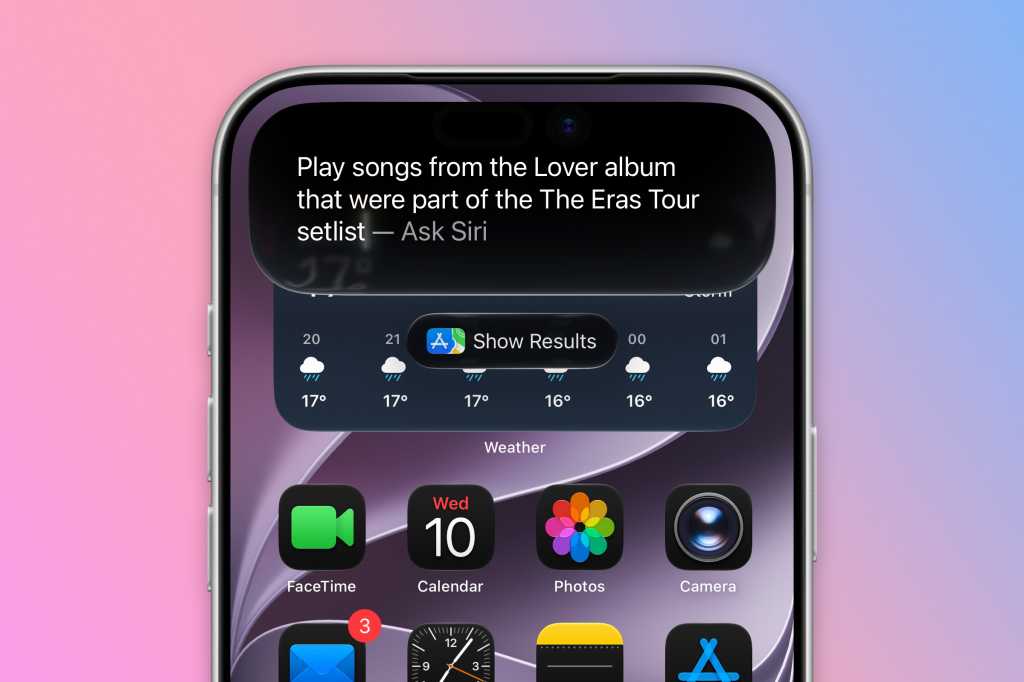
There’s a new Siri app, a dedicated ask screen, support for past conversations, and a chat-style experience that feels much closer to the assistants people already use on iOS 26’s quieter AI upgrades than to the old, timer-setting Siri many users have long tuned out. Apple says you’ll be able to ask for multiple things at once — check the weather, see your calendar, and send a text in one command — while Siri pulls in context from Messages, Calendar, Notes and other apps when it makes sense.
That contextual layer is the real story. Siri AI can look at what’s on your screen, interpret a product listing or event invite, and use that as part of the request. Apple also showed off a camera-based mode that resembles Google Lens: point your phone at a plant, a meal or a label, and Siri can identify it or extract useful details. On Mac, the same intelligence is being wired into Spotlight and screen analysis.
There are some genuinely practical touches too. “Write with Siri” is meant to help people draft and refine text across Apple devices, while automatic proofreading arrives alongside it. In other words, this isn’t just about conversation — it’s about making Siri useful inside the work people already do.
The AI engine underneath is finally the headline
Apple’s public message is that Apple Intelligence has matured into the backbone of its software. The company’s latest third-generation foundation models are built around a mixed architecture: on-device models for speed and privacy, and server-side models for heavier tasks.
Apple says the new model family was developed with Google, with some workloads also extending to NVIDIA GPUs in Google Cloud. That matters because it underscores the practical compromise Apple has made. The company is still wrapping the experience in privacy language and on-device processing, but the most capable parts of Siri’s new brain now rely on outside AI infrastructure.
There is some substance behind the pitch. Apple’s machine learning team says its new on-device model improves dictation and image understanding, while the larger cloud model boosts reasoning and multimodal performance. Apple also says its new image model can power better photo editing, Image Playground and Genmoji-style creation.
That foundation work is what enables the rest of the demo: more expressive voices, better speech recognition, smarter image tools and tighter app integration. It’s a cleaner story than Apple’s old “AI” messaging, but also a more cautious one. The company is not pretending it built the whole stack alone.
iOS 27 looks less like a redesign and more like an AI retrofit
If iOS 26 was the visual reset, iOS 27 is the software equivalent of a wiring job behind the walls.
Apple is not overhauling the interface again. Instead, it is polishing Liquid Glass, adding more customization so the look can be toned down for readability, and introducing a new Search index that catalogs more of what’s on your phone so results can be found faster.
A lot of the new functionality is hidden in familiar apps. Messages can surface information from threads more intelligently. Mail can pull out reservations and turn them into calendar entries or reminders. Shortcuts now accepts plain-language prompts instead of forcing users to assemble every step by hand. That may sound small, but it’s the sort of change that could make automation feel less like a hobby for power users and more like a built-in feature for everyone.
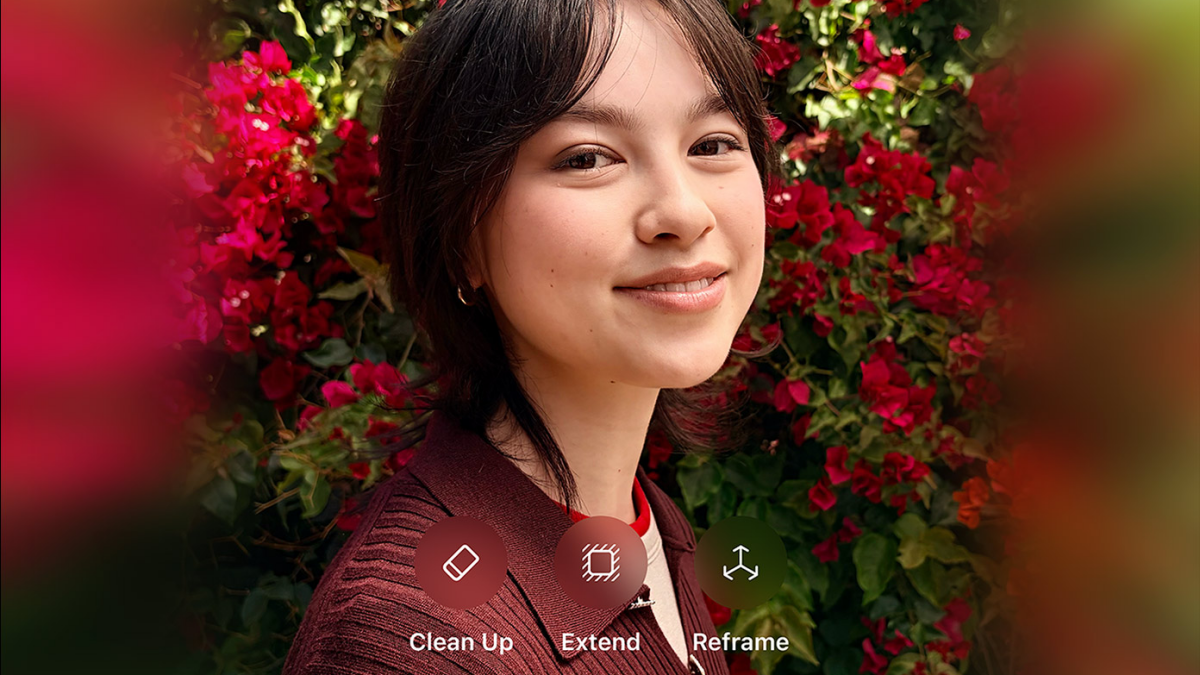
Apple is also widening the use of Visual Intelligence, pushing it beyond the Camera app and into Siri itself. Photos gets new AI editing tools, including Extend, Cleanup and Spatial Reframing, while users can build wallpapers and lock screens with generative features.
For a closer look at how Apple’s software overhaul is shaping up, our iOS 27 breakdown digs into the broader platform changes.
Parents are getting more control, too
Apple is also adding a substantial batch of child-safety tools in iOS 27, and these may end up being among the most useful additions for families.
Parents will be able to define “essential” apps, approve websites through an “ask to browse” flow, and manage approved contacts more tightly. New time allowances let them set limits by app type, including social media, while screen-time schedules can be adjusted by day — useful if weekday rules need to be different from weekend ones.
These aren’t flashy features, but they are the kind Apple knows how to sell: privacy-conscious, parent-friendly, and deeply integrated into the phone rather than bolted on.
macOS Golden Gate and Safari get the same AI treatment
On the Mac, the next release is called macOS Golden Gate, and it carries much of the same philosophy. Siri AI is being built into Spotlight, so the assistant isn’t stuck in a separate window or app. Conversations can also move from iPhone to Mac, which should make the whole experience feel less fragmented.
Safari is getting its own AI layer, too. Tabs can be automatically grouped by topic, which is the sort of small convenience that can save real time if you live in too many browser windows. There’s also a “notify me” feature that watches a page for a specific change and alerts you when it happens. That’s a narrow tool, but a useful one, especially for shopping, tickets or inventory tracking.
The EU problem is already here
Not every Apple user will get this on day one.
The company said Siri AI will not launch immediately in the European Union because of regulatory issues tied to the Digital Markets Act. Reuters reported that EU regulators rejected any suggestion of a tech-rule exemption, leaving Apple in a familiar standoff: it wants a unified software rollout, but it also wants to keep control over how deeply its assistant can access user data and app behavior.
That friction cuts to the heart of Apple’s new strategy. The more useful Siri becomes, the more personal data it needs. The more personal data it uses, the more regulators want a say in how it all works.
Investors wanted a moonshot. Apple handed them a working system
The market reaction says a lot.
Apple’s stock slipped after the keynote, which suggests Wall Street was hoping for a bigger leap than a rebuilt Siri and a broader Apple Intelligence rollout. Some analysts came away unimpressed, arguing that Apple still lacks a clear AI monetization story and remains dependent on Google’s models.
That critique isn’t wrong. But it may miss Apple’s actual strategy.
Rather than trying to out-open the OpenAI, Anthropic or Google ecosystem, Apple is doing something more defensive and, in its own way, more Apple-like: wrapping a capable assistant around the personal data and daily habits people already keep inside its devices. The company doesn’t need to be the smartest chatbot on the market if it can be the one that knows your calendar, your texts, your photos, your notes and your habits — and can act on them without sending you somewhere else.
That may not thrill every investor. It might not even satisfy every user. But it does make Siri feel like a product again, instead of a punchline.
And after 15 years of promises, that alone is a notable shift.