Apple is heading into WWDC with a familiar problem and an unusually high-stakes answer.
The problem is Siri. It still feels stuck in another era, and Apple knows it. The answer, at least if the rumor mill is right, is iOS 27: a major software release built around a rebuilt assistant, deeper AI hooks across the system, and a handful of practical upgrades that might matter just as much as the headline act.
That headline act appears to be a new Siri experience powered in part by Google’s Gemini model, with Apple reportedly using Nvidia’s Blackwell chips in Google Cloud and turning on confidential-compute protections to keep queries encrypted while they’re processed. It’s an unusual setup for a company that normally likes to control every layer of the stack, but it may be the fastest way for Apple to catch up in a category it has let drift for years.
Siri goes from helper to centerpiece
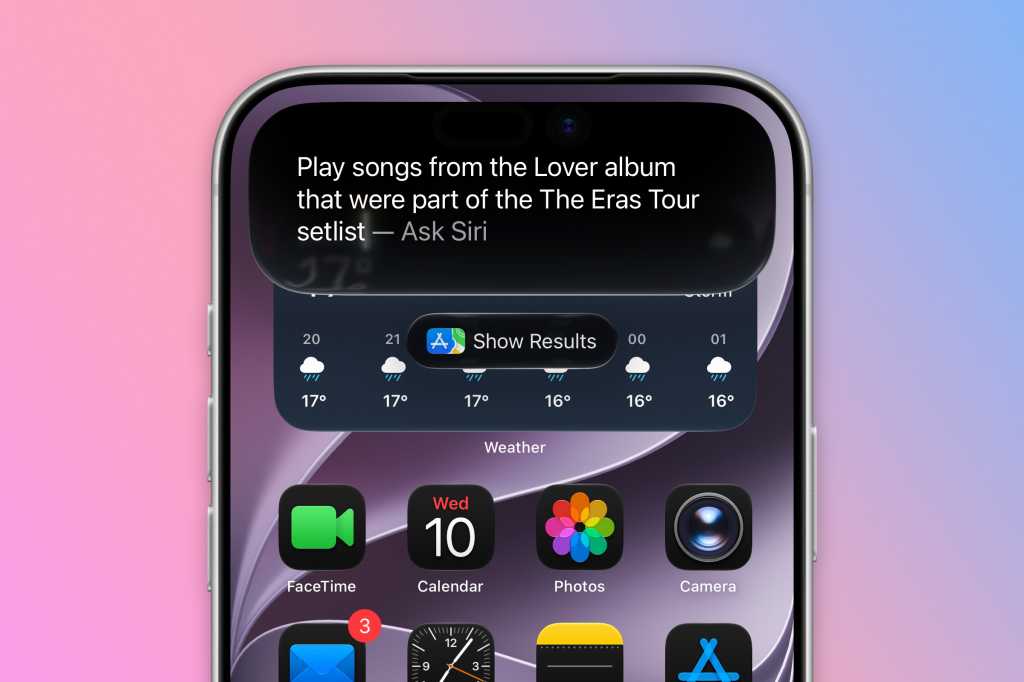
Apple hasn’t exactly been subtle about where the spotlight is landing. Reports point to Siri becoming far more conversational, with AI features woven through the operating system rather than tucked away in one app. That lines up with a broader push that could finally make Apple’s assistant feel less like a voice remote and more like a real interface.
There’s a catch, though: Apple is walking into a cultural minefield. Generative AI remains polarizing, especially among users who see it as noisy, power-hungry, error-prone, or just plain unwanted. At the same time, Apple is under pressure to prove it can compete with Google, OpenAI, and everyone else pushing AI into daily life. That tension runs through almost every rumor about iOS 27.
Macworld’s Jason Cross argues Apple may end up annoying both camps anyway — AI fans who think Apple is late, and AI skeptics who don’t want a chatbot bolted onto the iPhone. That’s not a great place to be, but it is a very Apple place to be: a company trying to make a controversial technology feel polite, private, and inevitable.
More than just Siri
The app-level rumors are more grounded, and in some cases more useful. MacRumors’ iOS 27 app roundup suggests Apple is preparing real changes for Camera, Photos, Shortcuts, Wallet, Writing Tools, and even the Home Screen.
The Camera app may get a dedicated Siri mode, replacing the awkwardly hidden Visual Intelligence entry points Apple uses today. That matters because Apple’s current setup is easy to miss unless you already know where to look. The new mode could make object recognition, web-based answers, and scanning features much more visible. It may also bring practical tools like nutrition-label scanning and contact capture from business cards.
Photos is rumored to gain AI editing tools for extending images, reframing spatial photos, and possibly handling natural-language editing requests. Shortcuts could become much more approachable if users can simply describe what they want and let Siri build the automation. Wallet may get a create-a-pass tool and AI-assisted bill splitting, which sounds a lot less flashy than an AI chatbot but probably helps more people on an average Tuesday.
Apple is also said to be testing expanded Writing Tools, a dedicated grammar checker, and more image-generation polish in Image Playground and Genmoji. That won’t thrill everyone — and some users would happily see those features disappear entirely — but it does suggest Apple is trying to make its AI tools feel less like demos and more like utilities.
The foldable iPhone shadow
A big part of iOS 27’s design work may not be about today’s iPhone at all. It may be about the one coming next.
Rumors continue to point to a foldable iPhone in Apple’s 2026 roadmap, and that device would need software that can handle a much broader screen when opened. If that happens, iOS 27 could become the bridge between the current phone and a new kind of layout — one that behaves more like an iPhone and an iPad had a very productive conversation.
That means sidebars, two apps side by side, and a rethinking of how Apple’s standard apps scale when the display expands. It’s the sort of change that can look minor in a keynote and turn out to be foundational six months later. The same goes for the rumored tweaks to tab bars, keyboard animations, undo and redo controls, and a more customizable Camera interface. None of that sounds glamorous. All of it sounds useful.
If Apple does move ahead with a larger, book-style foldable, the software groundwork around iPhone Fold will matter as much as the hardware itself. Users won’t forgive a pricey new device that still feels like an iPhone stretched across a different shape.
The wishlist crowd gets its own moment
Not everyone is waiting for Apple Intelligence to save the day. A lot of iPhone owners want simpler things: fewer bugs, better keyboard behavior, more control, less friction.
That mood is obvious in the reactions to WWDC rumors. In MacRumors comments, readers are asking for a better keyboard, clipboard history, PC file transfers, more flexible multitasking, guest mode on iPad, and even an RSS app. In other words: not another flashy feature, but a software cleanup that respects how people actually use their devices.
That’s where iOS 27 could still win people over. Bloomberg has described it as something like a “Snow Leopard” release, suggesting Apple may focus on stability, efficiency, and code cleanup as much as visible new features. Given how many users have spent the last couple of years complaining about bugs, autocorrect, and uneven performance, a quieter update might be exactly what the doctor ordered.
The same logic is showing up elsewhere in Apple’s software line. Recent iOS releases have already leaned on quiet fixes and workflow upgrades, which makes the rumored iOS 27 reset feel less like a pivot and more like the next step in a broader repair job.
The hardware story is still unfinished
Apple’s AI story doesn’t stop at the iPhone. CNET’s Scott Stein points out that the company’s future wearables — smart glasses, camera-equipped AirPods, a pendant-style device, and more capable Apple Watch features — all need a much smarter Siri to work well.
That’s where the Gemini deal starts to look less like a one-off and more like infrastructure. If Apple wants a pair of glasses that can describe the world, a wearable that can recognize what a user is looking at, or AirPods that can act like a lightweight assistant, it needs an AI layer that can handle vision, voice, and context in a way Apple Intelligence hasn’t yet delivered.
In that sense, WWDC may be less about showing off a finished product and more about admitting the future needs a new engine. Whether Apple is ready to announce the whole thing or just the parts it can safely preview, iOS 27 is clearly being built as the software foundation for what comes next.
And that’s the real reason this update has so much tension around it. It’s not just another annual refresh. It’s Apple trying to prove that Siri can finally grow up, that AI can be made to feel less invasive, and that the iPhone still has room to reinvent itself without losing the parts people actually trust.